

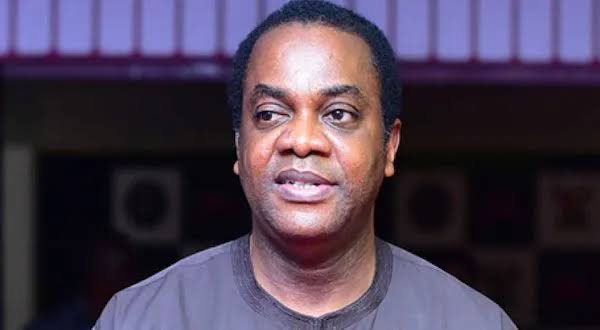

Nigeria Spends More On Oil Security Than Production — Donald Duke
The presidential candidate of the People’s Redemption Party, Donald Duke, has said Nigeria spends more on securing its crude oil than on extracting it, arguing that high security costs and deteriorating infrastructure have increased production expenses and contributed to the high cost of petrol.
Duke spoke during an interview with ARISE NEWS on Thursday, where he argued that reducing the cost of producing and refining crude oil could help lower petrol prices and ease the cost of living.
“The actual production cost of a crude in Nigeria is anywhere between $12 and $15. What takes it up to $25 or $45 is security costs and dilapidated infrastructure. So you’re paying more for security than producing the oil and even the NNPC says that they’re trying to bring it down to $20 a barrel. So in other words, the oil producing companies have added the security. You can’t tell me that you pay about $10 or $15 to secure one barrel that is produced actually between $12 and $15,” he said.
The former governor of Cross River State argued that the government should prioritise the productivity of Nigerians by addressing the factors driving up the cost of essential goods and services.
“I think the fundamental objective of government is the productivity of its citizens. So you’ve got to tackle all the things that are inimical to the productivity of your citizens,” Duke said.
He identified energy as a key factor in economic productivity, questioning why Nigerians continued to pay high prices for petrol despite the country’s crude oil resources.
“Now, energy is a kernel of it. Energy, capital, those things are very important. You’re an oil producing country. Supposedly you produce 1.7, 1.8 million barrels a day,” he said.
Duke clarifies ₦300 petrol proposal
Duke also clarified that his proposal was to reduce the price of petrol to ₦300 per litre, not ₦200, arguing that revenue from other petroleum products could help reduce the price.
“The point is, the margins that you make from other products, you can even use it and further dampen the price,” he said.
Explaining his proposed pricing model, Duke outlined the costs he said should be considered in calculating the price of refined petroleum products.
“Transportation takes it to $38. The refining costs about $10 a barrel. So that gives you $48,” he said.
He also referred to additional revenue from petroleum by-products as part of his argument for reducing the price of petrol.
Duke acknowledged that the ₦300-per-litre proposal might no longer be achievable because of existing crude oil commitments made by the government.
“The 300 figure is not tenable because the APC government, right, did a forward sale that didn’t make sense. But the reality is that you now have to blend. And if you blend it to say 700, 700 is still far better than 1,300,” he said.
He proposed that the government source available domestic crude oil and purchase additional supplies from producers operating in Nigeria to reduce transportation costs.
“If you don’t have the Nigerian crude, which is the fault of the same government, it’s APC. I’m coming, I’m coming. If you don’t have that crude, then you now go into the blended. What do you have and what can you buy? And try and buy it from the producers in Nigeria if they will allow you. So that at least you gain on freight,” Duke said.
He also proposed a contract-refining arrangement under which the government would supply crude oil to a refinery, pay an agreed processing fee and retain the refined products.
“Now, you contract refine. Recall, several years back, we used to swap crude for products, right? So it’s literally the same thing. You swap this, and I gave you my breakdown that it’s $10 maximum. I’m using the maximum here, $10 per barrel for refining.
“So it’s not, and it’s your crude. So you’re giving the refinery and saying, look, we agree on a price. I pay you that price. The product is mine. I know the by-products and how I distribute it, how I sell it, you know, it is left to me,” he said.
Duke maintained that the government could still reduce petrol prices substantially even if the ₦300 target was no longer realistic.
“If you take what you have and buy it back from your JV, JV partners and blend and put it together and blend the prices, the average, it will not be 300. It will be far less than what you’re paying today,” he said.
When asked whether ₦700 or ₦800 per litre would be a more realistic benchmark, Duke replied, “Benchmark. Yes. If you’re not, if the crude is not yours.”
Duke proposes fuel dyeing to curb smuggling
Duke rejected the argument that reducing domestic petrol prices would automatically encourage smuggling into neighbouring countries.
“Are you going to punish your citizens for your inability to map your borders? Let me give you another solution. You see, as a government, you must constantly think of solutions to problems,” he said.
He suggested that the government could use fuel colouring to help identify petroleum products allegedly transported across Nigeria’s borders.
“You can dye your fuel. You can dye your fuel black if you wanted to. It doesn’t affect its application. And if you dye it black and you see black fuel or green fuel around your neighbouring countries, you have NIA. They go there in cooperation with the nation’s security agencies and find out how that black fuel, which is unique to Nigeria, got there,” Duke said.