


Illicit Arms Fueling Banditry, Terrorism, Communal Violence — Ribadu
The National Security Adviser (NSA), Malam Nuhu Ribadu, has identified the proliferation of illicit small arms and light weapons as a major driver of insecurity, banditry, terrorism and communal violence in Nigeria.
Ribadu stated this on Thursday in Abuja at a workshop on lessons learnt from Nigeria’s 2016 National Baseline Survey on Illicit Small Arms and Light Weapons.
The workshop was organised by the National Centre for the Control of Small Arms and Light Weapons (NCCSALW) in collaboration with the United Nations Office for Disarmament Affairs (UNODA).
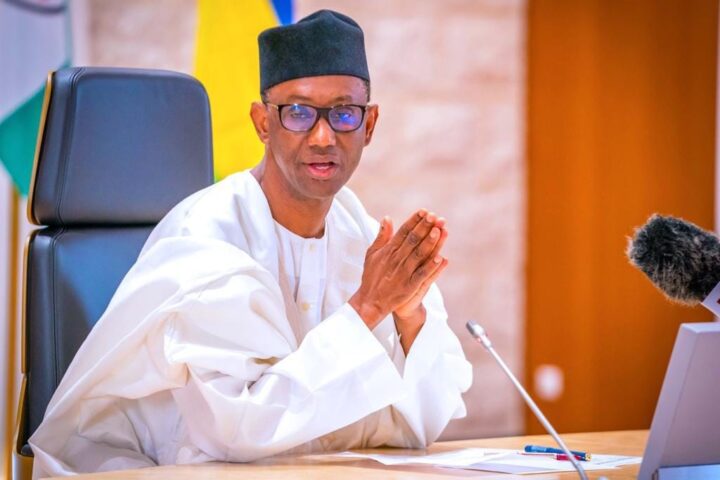
Represented by the Director of External Affairs in the Office of the NSA, Mr Solomon Feyintola, Ribadu said illicit weapons were sustaining violent criminal activities across different parts of the country.
He said the weapons were fuelling banditry in the North-West, communal and farmer-herder conflicts in the North-Central, while also strengthening criminal networks and the operational capacity of terrorist and insurgent groups in the North-East.
“The proliferation of illicit small arms and light weapons is not an abstract policy concern. It is a deadly threat to the safety of our people.
“Behind every statistic on illicit weapons is a community that has lost its peace, a family that has lost a loved one or a livelihood that has been destroyed,” he said.
The NSA stressed that Nigeria’s response to the challenge must be anchored on credible and up-to-date data rather than estimates.
He recalled that the 2016 National Baseline Survey provided important information on the scale and nature of illicit weapons proliferation and contributed to the formulation of national policies, including the establishment of the NCCSALW and the development of a National Action Plan.
Ribadu, however, said the country needed to conduct an honest assessment of the previous exercise before embarking on a new survey.
“Before we launch into the next National Baseline Survey, we owe ourselves the discipline of an honest review. What worked? What did not? And what must be done differently this time?” he asked.
According to him, a credible baseline would strengthen national efforts to combat illicit arms proliferation, improve counter-proliferation and disarmament strategies, and enhance the ability of security agencies to track the movement of illegal weapons within the country and across its borders.
He called for the involvement of security agencies, state and local governments, traditional and religious institutions, civil society organisations and communities in the proposed survey.
Ribadu also emphasised the importance of international cooperation, particularly the technical support provided by UNODA and the United Nations Regional Centre for Peace and Disarmament in Africa.
He expressed confidence that the workshop would produce practical lessons from the 2016 exercise and a clear roadmap for conducting a credible and comprehensive new national survey.
Earlier, the Director-General of NCCSALW, retired DIG Johnson Kokumo, said Nigeria’s security landscape had changed considerably since the last baseline survey.
He noted that new forms of criminality had emerged, while trafficking routes and methods had evolved, making it necessary to obtain current data on the illicit arms situation.
Kokumo said the new survey should provide detailed information on the nature, scale, distribution, sources and drivers of illicit weapons proliferation.
“It must provide an in-depth basis for understanding the evolving small arms and light weapons landscape, identifying priority areas for intervention, strengthening our national risk assessment and supporting evidence-based policy decisions,” he said.
Also speaking, Dr Adedeji Ebo, Director/Deputy High Representative of UNODA, said Nigeria could not effectively assess its current security threats using data from 2016 alone.
Ebo said reliable data was essential for determining the number and types of illicit weapons in circulation, identifying trafficking routes and understanding who possessed the weapons and how communities were being affected.
“Government interventions designed without aggregated and reliable data risk not being deployed in the areas where they are most needed,” he said.
He urged the Nigerian authorities to ensure that the new survey was rigorous, inclusive and properly integrated into the country’s existing arms-control framework.
Ebo also advocated the involvement of traditional and religious leaders, women, youths, farmers, fishers, artisanal producers and survivors of armed violence in the survey process.
He said the exercise could further position Nigeria as a regional centre for research, capacity building and training on illicit arms control.
According to him, UNODA remains committed to supporting Nigeria beyond the validation of the survey, including through technical assistance and efforts to translate its findings into effective policies.