


Lagos-Calabar Coastal Highway To Be Completed In Three Years – Umahi
The Minister of Works, David Umahi, has projected that the 750-kilometre Lagos-Calabar Coastal Highway will be completed within three years, raising the prospect of the road being delivered around 2029, before the end of President Bola Tinubu’s second term in 2031.
Umahi gave the timeline during a one-hour, 30-minute interview on Arise Television on Friday, where he defended the Federal Government’s decision to prioritise major legacy projects amid concerns over the condition of existing federal roads across the country.
The minister also acknowledged that the coastal highway was awarded without public bidding, insisting that the direct procurement process was lawful.
“There was no public bidding but there was direct procurement. It’s within the law. That’s all I’ve just said,” he stated.
Pressed on when the 750km highway would be completed, Umahi said the government was working towards delivering it within three years and beyond.
“We have four years plus by God’s special grace. So we are looking at three years,” he said.
Asked whether he was confident that the entire Lagos-Calabar Coastal Highway would be completed within that period, the minister linked his projection to his faith in Tinubu’s administration.
“I am a child of God. Faith is the evidence of things not seen. Okay, so I’m giving you the faith I have and the president that I know, that I believe that within the next three years plus, that the president will be able to complete that project,” he added.
The projection puts the expected completion around 2029, depending on the construction schedule of the different sections. However, Umahi did not provide a detailed construction timetable or specify completion dates for individual sections during the interview.
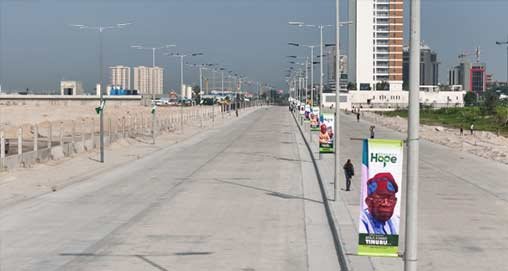
The Lagos-Calabar Coastal Highway is one of the Federal Government’s flagship infrastructure projects, intended to connect coastal communities and improve transportation along Nigeria’s southern corridor.
Its execution has generated debate over procurement, funding priorities, costs and the allocation of scarce public resources, particularly as motorists continue to face deteriorating conditions on several existing federal roads.
Defending the government’s infrastructure priorities, Umahi said about 17,000 kilometres of roads were being reconstructed or constructed under his ministry, apart from the major legacy projects.
“Out of about 35,000 kilometres of our federal roads, the one that is before me in the Ministry of Works, if you remove the few legacy projects we are constructing, we are presently constructing 17,000 kilometres of roads,” he said.
He added that the ministry had completed about 1,700 kilometres of roads since the administration came into office, alongside more than six kilometres of flyovers, bridges and underpasses.
Umahi cited congestion along the Lagos corridor as another justification for the coastal highway, warning that urgent intervention was needed to prevent worsening traffic.
“In the next five years, unless something is done in the corridor VI to Lekki, it becomes, you know, a car park because of the conjecture. And that’s why we are building the seven taxi route,” he said.
On the controversy surrounding plans to engage 4,000 social media influencers to promote the administration’s projects, Umahi said the initiative would be financed personally rather than through public funds.
He added, “I am funding 4,000 influencers to advertise what the president is doing and it’s a catalyst for campaigning for him all over Nigeria.”