


YABATECH Urges Students To Turn Nigeria’s Challenges Into Business Opportunities
Yaba College of Technology (YABATECH) has challenged students and staff to look beyond Nigeria’s socio-economic challenges and identify opportunities for innovation, entrepreneurship, wealth creation and sustainable development.
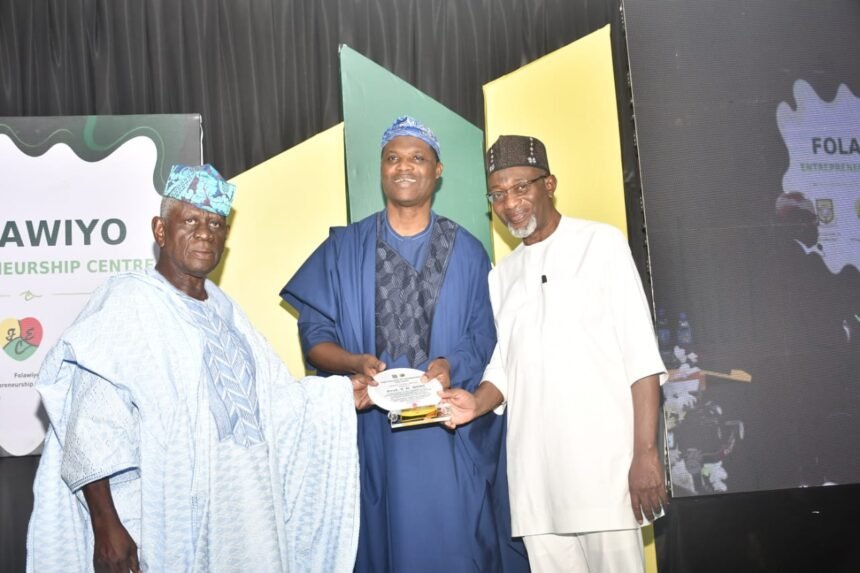
The call was made at the 2nd Annual Lecture Series of the Folawiyo Entrepreneurship Centre (FEC) held at the Yusuf Grillo Auditorium of the College .
The programme, organised under the theme,“Folawiyo Entrepreneurship Model Series 2: Real Estate Development Business in Nigeria,” featured a lecture by Professor Timothy Gbenga Nubi, Professor of Estate Management and Valuation and an alumnus of the college, titled “Sustainable Estate Development in Nigeria: Building Resilient Communities through Clean Water, Clean Energy and Innovation.”
Speaking at the event, the Rector of YABATECH, Dr. Engr. Ibraheem Abdul, said the lecture series underscored the College’s commitment to producing graduates who would not merely seek employment but would become creators of value, employers of labour and developers of solutions to societal challenges.
According to him, as a foremost institution of technical and vocational education, YABATECH recognises that Nigeria’s development requires human capital equipped with entrepreneurial, innovative and practical skills.
The Rector said the College was strengthening the connection between education, industry and enterprise, adding that the establishment of the Folawiyo Entrepreneurship Centre through the generosity of Chief Tunde Fanimokun, in honour of his benefactor, the late Chief Iyanda Olayinka Folawiyo, had provided an important platform for exposing members of the YABATECH community to practical entrepreneurship.
He described the late Chief Folawiyo as an entrepreneur whose legacy spanned trading, oil and gas, energy, shipping, agriculture and real estate, noting that the Centre was drawing inspiration from that legacy to broaden students’ understanding of enterprise.
Abdul explained that while the Centre’s monthly Open Market Sales had exposed the College community to the trading dimension of the Folawiyo business model, the annual lecture series was providing an avenue to examine other sectors and dimensions of entrepreneurship.
He described the focus on sustainable real estate development as timely, noting that contemporary real estate development should extend beyond the construction of physical structures to include access to quality water, clean energy, environmental sustainability, energy efficiency and the development of resilient communities.
The Rector also commended the Centre for incorporating a Business Idea Presentation and Realtors’ Exhibition into the programme, saying they provided opportunities for students and staff to develop practical solutions and interact directly with professionals in the real estate sector.
Earlier, the Director of the Folawiyo Entrepreneurship Centre, Dr. Funmilayo Adeoye, said the Centre was established to expose members of the College community to practical entrepreneurship and different dimensions of the enterprise model associated with the Folawiyo legacy.
She said the monthly Open Market Sales represented the Centre’s engagement with the trading component of the model, while the annual lecture series was designed to explore other areas of enterprise and business development.
Adeoye said the choice of sustainable estate development was particularly significant because of its relationship with the United Nations Sustainable Development Goals, especially SDG 6 on clean water and sanitation, SDG 7 on affordable and clean energy, and SDG 11 on sustainable cities and communities.
She called on entrepreneurs, investors and industry partners to go beyond observing students’ business ideas and identify promising ventures that could be supported through funding, mentorship, partnerships and joint ventures.
“Entrepreneurship is not only about making a profit. We are not profit seekers as entrepreneurs; we are problem solvers,” she said, urging students to concentrate on creating value, solving real problems and building sustainable enterprises.
The founder of the DSE Foundation and chairman of the lecture, Chief Tunde Fanimokun, said his decision to initiate the Centre was inspired by his personal experience working with the late Chief Iyanda Olayinka Folawiyo.
Fanimokun recalled that after voluntarily retiring from public service before the age of 40, he was invited by Chief Folawiyo to participate in the management of his business empire, despite having no direct entrepreneurial experience at the time.
He said the seven years he spent working with the business leader exposed him to important lessons in entrepreneurship, wealth creation, business management and the responsibility of preparing the younger generation for the future.
According to him, the experience strengthened his conviction that entrepreneurship could serve as a pathway to individual advancement and sustainable national development, prompting him to establish the Folawiyo Entrepreneurship Centre at YABATECH as part of his contribution to society.
He urged students to take advantage of the opportunities provided by the Centre, describing it as a platform that could influence their future and prepare them to contribute meaningfully to Nigeria’s development.
Fanimokun advised the students to start small, acquire knowledge, remain flexible and develop clear vision, mission and strategy, which he identified as essential ingredients for sustainable success.
Delivering the keynote lecture, Professor Nubi challenged young Nigerians to change their perception of the country’s challenges and begin to see opportunities for enterprise in the solutions to those challenges.
He explained that real estate was far more than the ownership or development of physical structures, stressing that the sector had implications for public health, physical safety, family wealth, employment, transportation, energy, water supply and the wider economy.
According to him, Nigeria’s housing challenge goes beyond the number of available houses to issues of quality, affordability, infrastructure and the overall living environment.
Nubi identified numerous entrepreneurial opportunities along the real estate value chain, including land acquisition and planning, construction, plumbing, electrical works, painting, landscaping, interior decoration, furnishing, facility management, cleaning and the production and supply of building materials.
He identified inadequate water supply, high energy costs, waste management, poor roads, housing shortages and food supply as some of the areas where young Nigerians could build enterprises while simultaneously addressing pressing societal needs.
The professor also drew attention to the growing impact of artificial intelligence on the world of work, urging students to acquire practical and technical skills that would remain relevant as automation continues to reshape employment.
He cited professions such as plumbing, electrical installation, construction and other technical services as examples of skills-based areas capable of providing sustainable livelihoods.
On urban development, Nubi advocated deliberate urban regeneration, saying communities once regarded as slums could be transformed through effective planning, infrastructure development, entrepreneurship and collaboration between government and the private sector.
He challenged the students to consider the legacy they intended to leave after graduating from YABATECH, asking them to think about the company, project, innovation or solution for which they would be remembered.
The programme also featured a Hackathon/Business Idea Presentation involving students and staff of the College.
Giving an insight into the assessment process, Dr. Oloketuyi said the organising committee received 32 proposals, comprising 22 student entries and 10 from staff.
He said the proposals were assessed on the basis of innovation and creativity, feasibility and sustainability, market potential and scalability, business model, and clarity and quality of presentation. Three staff proposals and three student presentations were adjudged best.
In the student category, Komolafe Joseph emerged first and received a ₦250,000 prize, complemented by an additional ₦250,000 donation from Chief Fanimokun.
Olaleye Femi emerged second and received ₦200,000, alongside an additional ₦200,000 donation from Fanimokun, while Raymond Egbuson placed third and received ₦150,000, also matched by the Chairman. The college pledged the development of the business ideas as scholarships.
In the staff category, Mr Babatunde Adesoji Atiba, Mr Abdulwakeel Oluwatobi Atóyèbí and Dr Adebola Karamah Shogbuyi emerged first and received a ₦250,000 cash prize.
Mrs Aishatu Atóyèbí emerged second and received ₦200,000, while Dr Adebola Karamah Shogbuyi, Mr Babatunde Adesoji Atiba and Mr Abdulwakeel Oluwatobi Atóyèbí were also listed among the third-place recipients, with a ₦150,000 prize.
In a goodwill message, ESV Toyin Kadiri, represented by ESV Dotun Bamigbola, commended YABATECH and the organisers for creating a platform that exposed students to practical opportunities in real estate.
He encouraged the students to explore contemporary investment opportunities, including Real Estate Investment Trusts (REITs), as avenues for participating in property investment without necessarily purchasing physical property outright.