



YABATECH’S Transformation: Obasa, Council, Partners Celebrate Institutional Milestone
The historic transformation of Yaba College of Technology (YABATECH) into a specialised university has continued to attract commendation from stakeholders, as the institution celebrated its development partners, distinguished contributors and members of its Governing Council at its 38th Convocation Dinner and Awards.
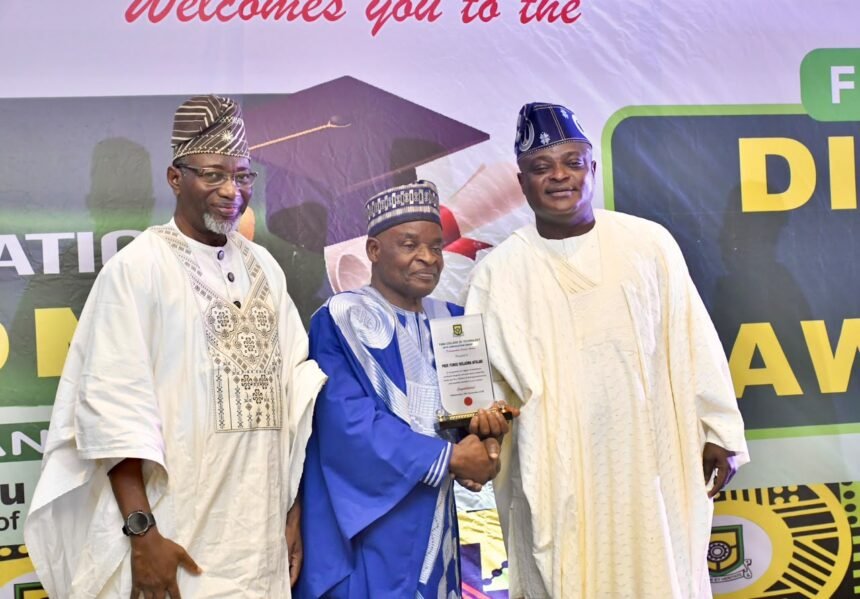
The glamorous ceremony, held at the Radisson Blu Hotel, Ikeja, Lagos, brought together prominent personalities from government, academia, industry and the private sector, with the Speaker of the Lagos State House of Assembly, Rt. Hon. Mudashiru Obasa, serving as Chairman of the occasion.
The event was a celebration of institutional progress, strategic partnerships, meritorious service and the collective commitment of stakeholders to repositioning the College for greater accomplishments in technological education, innovation, entrepreneurship and national development.
In his welcome address, the Rector, Dr. Engr. Ibraheem Adedotun Abdul, described YABATECH as a forward-thinking institution driven by innovation, practical knowledge, creativity and an enduring ambition to push boundaries in technological and vocational education.
He said the College was undergoing remarkable transformation across its classrooms, laboratories, workshops, studios and administrative structures, reflecting the administration’s determination to build an institution capable of meeting contemporary educational demands and contributing meaningfully to national development.
Abdul said the convocation dinner was deliberately designed to recognise individuals and organisations whose contributions had strengthened the College, noting that the administration firmly believed that excellence deserved recognition, discipline should be rewarded and meritorious service should never go unnoticed.
“We are practical, innovative, forward-thinking and driven by an enduring ambition to push boundaries. Tonight, we are also celebrating the spirit of innovation and the remarkable transformation taking place constantly within our workshops, studios and classrooms,” he said.
The Rector emphasised that the College’s development agenda was anchored on collective responsibility, stakeholder engagement, strategic partnerships and the empowerment of its workforce and students.
He said his administration had continued to prioritise the recognition of outstanding contributions by staff, students, partners and other stakeholders as a means of promoting excellence, strengthening institutional loyalty and encouraging greater commitment to the College’s vision.
University conversion: A historic milestone
A major highlight of the Rector’s address was the historic conversion of YABATECH from a polytechnic into a specialised university, a development he described as the culmination of nearly two decades of sustained aspiration, advocacy and institutional commitment.
He recalled that the quest for the conversion had been pursued since 2006 by successive Governing Councils, management teams and stakeholders, but was eventually realised through collective determination and the strategic intervention of the current Governing Council.
Abdul particularly commended the Council members for their unwavering support, strategic direction, commitment and determination, which he said played significant roles in bringing the long-awaited transformation to fruition.
He expressed appreciation to President Bola Ahmed Tinubu for approving the conversion, describing the development as a defining moment in the history of the College and a new chapter in its institutional evolution.
The Rector stressed that the achievement was not the accomplishment of any individual administration but the product of collective efforts involving successive leaderships, staff, stakeholders, partners and government.
He, however, noted that the new status came with greater responsibilities, requiring the College to intensify its commitment to specialised technological education, vocational studies, research, innovation, industry collaboration, entrepreneurship and the production of highly skilled manpower.
According to him, the institution would continue to build on its longstanding reputation as a centre of practical learning while adapting its programmes, facilities, teaching methodologies and partnerships to meet the demands of the emerging university structure.
In another development, the Six Federal Government-appointed members of the Governing Council received Distinguished Service Awards in recognition of their contributions to the development, stability and transformation of the College.
The Rector described the awardees as committed stakeholders who had demonstrated exceptional dedication to the institution beyond their statutory responsibilities.
He said the Council members had consistently provided guidance, offered constructive advice, visited the College to assess its needs and supported management in addressing challenges confronting the institution.
Abdul noted that their interventions had helped promote peace, stability and harmonious relationships among stakeholders, thereby creating an enabling environment for development and progress.
He observed that effective governance in tertiary institutions required wisdom, patience, maturity and the ability to resolve disagreements before they escalated into crises capable of disrupting academic activities.
The Rector commended the Council members for their role in ensuring that the College remained focused on its development priorities despite the challenges associated with managing a complex tertiary institution.
He described their contributions as invaluable to the successful implementation of the College’s transformation agenda and the realisation of its university status.
The College also honoured individuals and corporate organisations under the Award of Excellence in Community Service and Social Impact category for their contributions to educational development, student empowerment, institutional advancement and nation’s development.
The awards highlighted the growing importance of partnerships in the College’s development strategy, particularly collaborations that support students through mentorship, scholarships, financial assistance, grants, professional development and other empowerment initiatives.
The Rector said several individuals and organisations had continued to provide valuable support to the College and its students, helping to expand opportunities, strengthen academic programmes and promote the welfare and development of young people.
He acknowledged partners who had contributed to the educational advancement of students through financial and material assistance, mentorship, fellowship, professional guidance and other impactful interventions.
Abdul said the administration was committed to deepening existing partnerships while exploring new collaborations with industry, government agencies, international organisations, philanthropists, alumni, professional bodies and other development stakeholders.
He emphasised that the future of technological education depended significantly on the ability of institutions to build mutually beneficial relationships that would promote innovation, practical training, research, entrepreneurship, employability and sustainable development.
The Rector added that the College would continue to create opportunities for its students to acquire relevant skills, benefit from industry exposure, participate in mentorship programmes and develop the competencies required to succeed in an increasingly competitive global economy.
He also reaffirmed the administration’s commitment to staff development, professional growth, recognition of excellence and creating an enabling environment for employees to contribute effectively to institutional advancement.
Rewarding excellence and professional achievement
Abdul disclosed that the College had institutionalised several recognition programmes to reward outstanding achievements among its staff and other members of the academic community.
These include departmental and school awards, recognition for research publications, patent development, grant acquisition, lifetime achievements, distinguished service and other exceptional contributions to the institution and society.
He said the initiatives were aimed at encouraging innovation, research productivity, professional excellence and dedication to duty while strengthening the culture of merit within the College.
The Rector also highlighted the College’s Fellowship Award, presented annually to distinguished Nigerians who have made significant contributions to education and national development.
He said the administration remained committed to identifying, celebrating and rewarding individuals whose accomplishments and contributions reflected the values and aspirations of the institution.
The Speaker of the Lagos State House of Assembly, Rt. Hon. Mudashiru Obasa, who chaired the occasion, was recognised for his contributions to educational development and his support for the advancement of YABATECH.
Obasa traced his relationship with the College to the time of his efforts at securing admission into the institution but faith denied him but quick to disclosed that his immediate family gained what he missed by being graduates of the College.
He encouraged the Management and Governing Council members not to relent in their oars on this feat but to be more focus on the new mandate of the institution being a specialised University.
His participation, he said, underscored the importance of government support and collaboration in strengthening educational institutions and advancing human-capital development.
The Chairman of the Governing Council, Prof. Funso Isolaowa Afolabi, in his address, acknowledged the collective efforts of stakeholders in driving the College’s transformation and urged them to sustain their commitment to its development.
He stressed the importance of unity, institutional stability, strategic leadership and collective ownership of the College’s achievements, particularly as it embarks on a new journey as a specialised university.
Afolabi commended the Rector, management, staff, council members, partners and other stakeholders for their contributions, expressing confidence that sustained cooperation would enable the institution to consolidate its achievements and fulfil its new mandate.
The Registrar and Secretary to Council, Mrs Henrietta Adebola Badejo, delivered the vote of thanks, expressing appreciation to the Chairman of the occasion, the Governing Council, the Rector and management, award recipients, partners, guests and members of the organising committee for making the event successful.
She commended the awardees for their contributions to the College and encouraged stakeholders to continue supporting its development aspirations.
National Troupe showcases Nigeria’s cultural heritage
The evening was further enlivened by captivating performances from the National Troupe of Nigeria, which showcased Nigeria’s rich cultural heritage through vibrant Yoruba, Hausa and Igbo cultural displays.
The performances added colour, excitement and artistic splendour to the occasion, entertaining guests and reinforcing the importance of cultural identity, diversity and national unity.
The dinner was characterised by elegance, glamour, pomp and ceremony, with the presentation of awards serving as the central highlight of the celebration.
The 38th Convocation Dinner and Awards was a reflection of YABATECH’s renewed institutional direction under the present administration, which places premium on transformation, partnerships, staff and student empowerment, innovation, peaceful governance and recognition of excellence.
As the College transitions into its new status as a specialised university, its leadership has reaffirmed its determination to consolidate the gains of the past, expand opportunities for its students and staff, strengthen collaborations and position the institution as a leading hub for technological, vocational, entrepreneurial and innovative education in Nigeria and beyond.