


What Manner Of Opposition?, By Tunde Abatan
According to the Journal of Political Discourse, “Opposition politics refers to the organized political activities and actions of minority parties or groups that do not hold executive power.
Their primary goal is to scrutinize the ruling government, provide alternative policies, and challenge the party in power in order to replace them during subsequent elections .”
In other words, the parties has core functions and Dynamics like accountability and checks in order to act as crucial check and balance by monitoring legislative actions and demanding transparency thus preventing the ruling party from abusing its powers.
In saner climes like the the British Parliament and the United States of America where we have two dominant parties- the Labour and Conservative Parties and the Democrats and Republican parties, any party in opposition both in and out of the legislature provide constructive criticisms of the party in power at any point in time and offer credible alternatives which they often used in effecting the change of government at subsequent elections.
However, having with regard to the nature of politics in Nigeria, the last period when the country had virile Opposition parties was during both the First Republic and Second republics which both died in 1966 and 1983 respectively via military coup .
It was a fact that the military coup aroused out of inability of the ruling parties to manage power, tolerate and contain the virile Opposition parties.
The Opposition parties in both republics were identified by specific manifestoes and programmes.
For instance, the then Action Group led by late sage, Obafemi Awolowo came out and was identify with programmes centred on life more abundant and free education as its core manifestoes while the National Council of Nigeria Citizens, NCNC led by the late first republic President, Dr Nnamdi Azikwe was a mild conservative party of the right with Power as its goal.
In the same vein, the Northern Peoples Congress, NPC, led by late Sardauna of Sokoto and Premier of the Northern region, Sir Ahmadu Bello, led the Northern Peoples Congress, NPC which was ultra conservative and its goal was to promote the interests of the North.
The same feat was repeated in the second republic when Awolowo’s Unity Party of Nigeria ,UPN, a reincarnation of the defunct AG, promised four cardinal programmes of Free Education at all levels, free health services ,Integrated Rural Development and Full employment.
The then Nigerian People’s Party, NPP, also an offshoot of the NCNC, and led by Zik promised good life for Nigerians with no specifics while the National Party of Nigeria, NPN also an offshoot of the conservative Northern People’s Congress, NPC promised Food and Shelter for all Nigerians.
The People’s Redemption Party, PRP led by the late Mallam Aminu Kano was focused on eradicating poverty in the country and this was reflected in the followership made up of the Talakawa’s- downtrodden of the North and other radicals from the South including Nobel Laureate, Wole Soyinka.
Indeed, Chief Awolowo was noted for strident criticisms of the policies of the then President Alhaji Shehu Shagari led NPN and you know where he stands on economy social issues while his party in the five states under his control implemented the Four cardinal programmes of the party .
His criticisms were often made with clear alternative choices
During the period, it was possible to identify the standing of notable politicians and public office seekers by their party membership and identification.
Today, 27 years after the birth of the Fourth republic, you hardly notice any difference between the ruling party and the others in Opposition as members move freely from one party to the other.
Indeed, it is not out of place to describe the 19 or so registered political parties as same of same.
The difference between them is likened to difference between six and half a dozen as politicians move freely from one party to the other.
No more ideology, but personal interest of politicians majority of who grew from background of been in politics not for the people but for personal interests and goals.
What you have is that a politician you see on Sunday evening in one party, the following morning is found in another principally because he either lost primary elections or couldn’t get nominated for any political office.
It is not out of place to say that this factor is the reason for underdevelopment of the country.
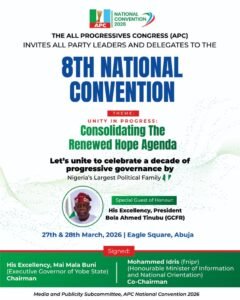
Today, barely six months to the next general elections, none of the leading presidential contenders and their political parties have come out to identify and map out concrete manifestoes to justify that they represent an alternative to the ruling All Progressives Congress, APC led by President Bola Ahmed Tinubu.
It is worrisome because since he came into power, the Tinubu government has implemented policies and far reaching Programmes which has altered significantly the economic fortunes of Nigerians and by far change the structure of the polity by virtue of surreptitious attempt to change the old order as represented by decentralization of power and policies.
Power and policies over the years have undermined the ‘nova riche’ who made money through corrupt tendencies and manipulation of our weak institutions.
Recently, Alhaji Atiku Abubakar, the former Vice president of the country who had contested for presidency four electoral cycles replied when asked by Arise Television what he would do differently.
He simply replied ‘everything ” Throughout the one hour interview, he refused to tell millions of viewers what his programmes are and why he wanted Nigerians to see him as an alternative.
No concrete alternative to the economic programmes and security challenges facing the nation.
One would have expected a robust analysis of where the incumbent government has failed and what credible alternatives he has.
Everything centred on personal issues and ambition to occupy the position without how he intend to solve the myriad of problems confronting the country.
All campaign is full of sound and fury and in William Shakespeare words, ” signifying nothing”.
Also in the same shoe is Peter Obi, former presidential candidate of the Labour Parry, LP, who has changed parties four times since he left the APGA, his first party on which he became governor of Anambra state.
When asked what he would do differently he told his bewildered audience and followers he would tour the country for six months to identify its problems and also use economic models of Singapore, Argentina-a recently failed governance model, to govern the country.
It is unfortunate that about three months ago, precisely on April 24,Opposition parties who had no clear agenda of what they intend to use power for gathered in Ibadan ,Oyo state capital to join forces together and present a single candidate for next years election to defeat the ruling party..no clear roadmap but to get power.
Hardly, had they left the meeting than all the leading aspirants dissolve into at least four parties-ADC,NDC,NDC and APM to seek power.
It is clear that lack of credible agenda by opposition has robbed the country of better and good leadership.
A virile and purposefully Opposition should by now have identified inadequacies of the present Renewed Hope Initiave being pursued by the Tinubu led government and map out concrete roadmap to steer the nation away from what they described as ‘bad governance “.
Campaigns are now devoid of clear alternatives but pursuant of personal ambitions of leading opposition figures like Atiku, Obi, Rabiu Kwankwaso while other fringe parties like the rebirth PRP,APM and whatever is left of the People’s Democratic Party, PDP are just holding on and making noise without presenting the masses with concrete programmes to justify confidence in trusting them with power.
It is clear that the bane of development in the country remains lack of clear party ideologies as politicians and office seekers are out to get personal gains and not to get power to serve the people.
While poverty induced ignorance has permeated the populace and denied them a clear choice among leaders, the loser is the larger country which is bogged down by lack of men with mission and vision to uplift the people and the country at large.
The next few months will be interesting only if opposition parties provide clear alternatives to the ruling government now in control of 31 out of the country’s 36 states.