


Sanwo-Olu Charges Financial Institutions To Unluck Private Investment, Improve Productivity, Create Employment
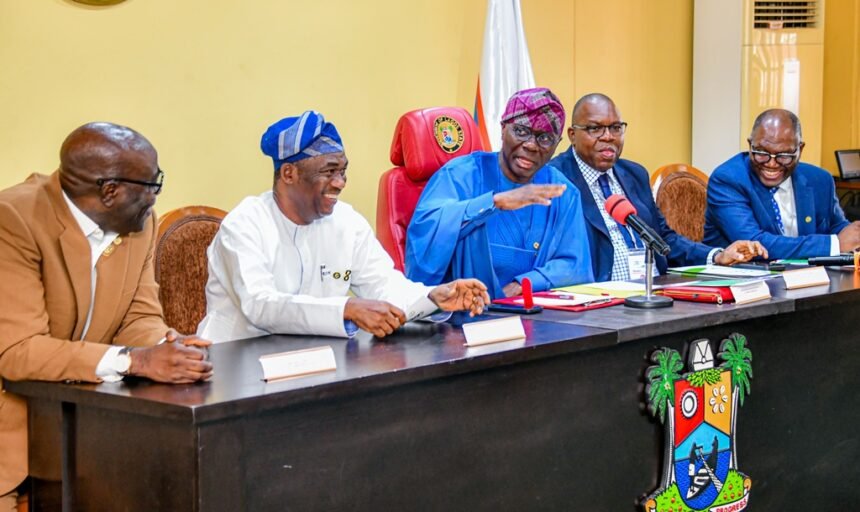
The Governor of Lagos State, Mr. Babajide Sanwo-Olu, has charged financial institutions to look beyond conventional lending and become more active partners in unlocking substantial private investment, improving productivity and creating employment.
Governor Sanwo-Olu said recapitalized banks should develop financing models that support long-term industrial growth without compromising prudent risk management.
He spoke at the 2026 Chartered Institute of Bankers of Nigeria (CIBN) Fellowship Investiture themed: “Bank Recapitalization: Leveraging New Bank Capital for Nigeria’s Industrial Transformation” at Victoria Island, Lagos on Saturday.
During the 2026 CIBN Fellowship Investiture, 21 recipients were conferred with Honorary Fellowship, while 463 and 232 received new Fellows and Honorary Senior Membership of the Institute in recognition of professional excellence, leadership and contribution to the development of financial system and national economy.
Among the recipients of the Honorary Fellows are Mr. Samuel Egube, the Deputy Chief of Staff to Governor Sanwo-Olu; Secretary to the Ogun State Government, Mr. Tokunbo Talabi; Governor, Bank of Sierra Leone, Dr. Ibrahim Stevens; Vice Chairman, Famfa Oil Limited, Apostle (Mrs) Folorunsho Alakija and Chairman, Keystone Bank Limited, Lady Ada Chukwudozie, among others. Lagos State Commissioner for Transport, Mr. Oluwaseun Osiyemi, was also conferred with the Elected Fellow of the Institute.
Governor Sanwo-Olu assured that Lagos will continue to provide the infrastructure, policies and enabling environment that businesses require to thrive.
He said: “Recapitalization has strengthened the capacity of our banks to withstand economic pressures and undertake larger transactions. But raising capital is only the beginning. The true measure of success will be how effectively that capital supports productive enterprises, industrial expansion and economic opportunities for Nigerians.
“One of the greatest challenges facing Nigerian businesses remains access to affordable, long-term financing. Manufacturers need capital to acquire machinery, expand production and compete in international markets. Agricultural processors need financing for storage, processing and distribution, while growing enterprises require credit that reflects their business realities. These investments take time to generate returns. Our recapitalized banks must therefore develop financing models that support long-term industrial growth without compromising prudent risk management.
“In Lagos, we see enormous opportunities for this kind of investment. The Lekki Deep Sea Port, expanding industrial activities along the Lekki corridor, our investments in rail and road infrastructure, and the opportunities created by the Lagos State Electricity Law are opening new possibilities for manufacturing, logistics, energy and trade. These are sectors where stronger participation by financial institutions can unlock substantial private investment, improve productivity and create employment.”
Governor Sanwo-Olu stressed further that “We must ensure that smaller businesses benefit from this stronger banking system. Through the Lagos State Employment Trust Fund, we have continued to support entrepreneurs with access to finance, enterprise development and capacity building. However, government intervention alone cannot meet the financing needs of our growing business community. We need commercial banks to develop more accessible credit products, support industrial clusters, finance equipment acquisition and strengthen the supply chains that connect small enterprises to larger markets.
“Lagos will continue to provide the infrastructure, policies and enabling environment that businesses require to thrive. But the scale of investment needed to transform our economy demands stronger collaboration between government, financial institutions and private investors. We must move from simply having more capital in our banks to putting more capital to work in our economy.
“As we pursue this ambition, we must never compromise the integrity of our financial system. Strong capital positions must be accompanied by sound corporate governance, responsible lending, transparency and professional competence. This is where the Chartered Institute of Bankers of Nigeria has a particularly important responsibility. Beyond professional certification and recognition, the Institute must continue to develop bankers who understand the financing needs of industry, emerging technologies and the wider development priorities of our country.”
Governor Sanwo-Olu congratulated the recipients, particularly his Deputy Chief of Staff, Mr. Samuel Egube and Commissioner for Transport, Mr. Oluwaseun Osiyemi for being among those who were conferred with CIBN Fellowship, noting that the honors attest to their competence, dedication and valuable contributions to his administration.
He said the recognition places a responsibility on the recipients to strengthen the institutions they serve, mentor younger professionals and contribute their experience towards addressing the challenges facing the economy.
“The banking profession needs leaders who will not only preserve its standards but also help shape its future. Nigeria has recapitalized its banks. The next task is to help recapitalize Nigerian industry. The success of this exercise should ultimately be visible in the factories we establish, the businesses we grow, the exports we generate and the opportunities we create for our young people,” he said.
Governor Sanwo-Olu also congratulated the Chartered Institute of Bankers of Nigeria on another successful investiture and commended its leadership for sustaining the standards of the profession.