



Election Petitions: Courts Must Not Replace Voters- Osigwe Warns At NGE Conference
Former President of the Nigerian Bar Association (NBA), Mazi Afam Osigwe, SAN, has raised concerns over the increasing role of the courts in determining electoral outcomes in Nigeria, warning that the judiciary should not gradually replace voters in deciding who represents the people.
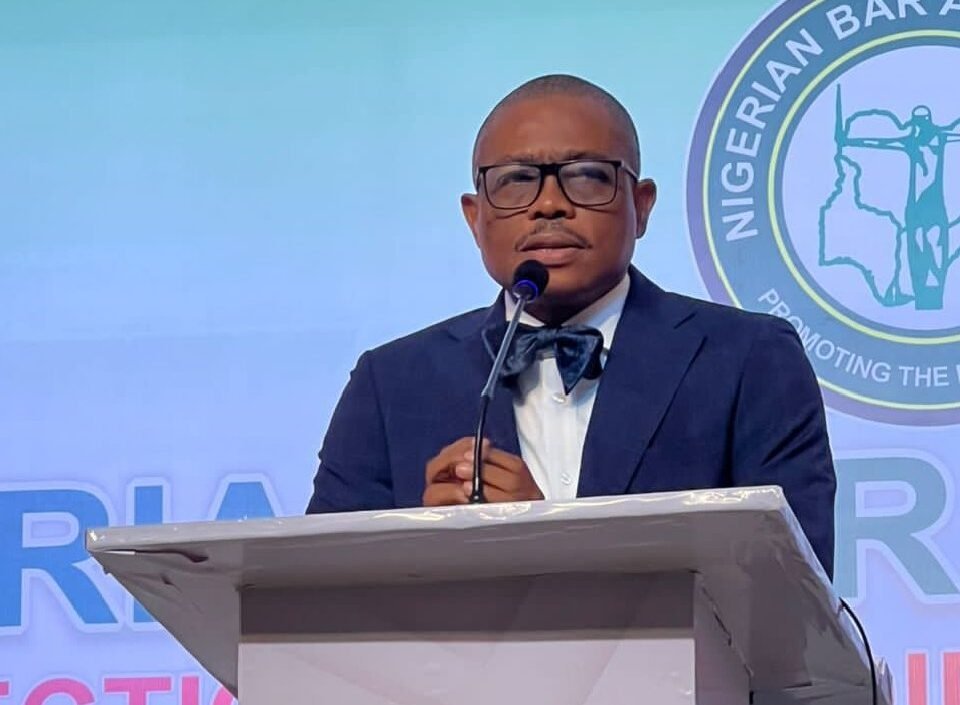
Osigwe spoke on Thursday while delivering a presentation titled “Election Petitions in the Digital Age: Independence, Evidence, BVAS and the Courts” at the 22nd Annual All Nigeria Editors Conference in Enugu. The session formed part of the conference’s programme on electoral integrity and democratic governance.
He said the manner in which election petitions are handled, particularly the difficulty of proving electoral non-compliance, had contributed to what he described as the increasing “judicialisation” of Nigeria’s electoral process.
According to him, the situation has created a system where courts are frequently called upon to determine who won elections instead of merely resolving legal disputes arising from the electoral process.
Osigwe said a judge and friend of his had previously described the development as “the judicialization of the electoral process”, arguing that the difficulty of proving electoral wrongdoing had increasingly placed the courts in the position of determining representatives of the people.
“I couldn’t have agreed with him more,” Osigwe said.
He said Nigeria had one of the highest numbers of election petitions, adding that the frequency with which courts are involved in determining electoral outcomes had implications for public confidence in elections.
Voter apathy
Osigwe also linked declining voter participation to the perception among many Nigerians that their votes may not ultimately determine electoral outcomes.
He said some voters were discouraged by concerns over what happens between voting at polling units and the announcement of results at collation centres.
“Many Nigerians do not quite believe that whatever votes they cast matter, or that they count, or that they’re of any consequence,” he said.
According to him, concerns over violence, voter suppression, ethnic profiling and other electoral abuses could further discourage citizens from participating in elections.
He also criticised vote-buying and the recruitment of young people as political thugs, saying politicians sometimes exploit citizens’ economic difficulties to mobilise them for activities that undermine the electoral process.
Osigwe said the cumulative effect was a weakening of public confidence in democratic institutions.
The former NBA president also questioned the practical independence of the Independent National Electoral Commission (INEC), despite its constitutional status.
He said the manner in which electoral officials are appointed, as well as the use of ad-hoc personnel in elections, could create concerns about the commission’s ability to operate independently.
Osigwe also raised concerns about the involvement of academics in election administration, arguing that allegations and convictions involving some electoral personnel had raised questions about the integrity of the system.
He said similar concerns extended to State Independent Electoral Commissions, alleging that ruling parties frequently dominate elections conducted by the bodies.
“Sometimes you’ll be waiting for the ballot papers to arrive, and the results are announced,” he said, questioning how independent such electoral institutions could be perceived to be under such circumstances.
Turning to technology, Osigwe said the introduction of electronic tools such as the Bimodal Voter Accreditation System (BVAS) and the INEC Result Viewing Portal (IReV) had raised new questions about the nature and admissibility of electoral evidence.
He recalled the introduction of smart-card readers in 2015 and the subsequent deployment of BVAS, saying the technologies were initially expected to make it easier to establish what occurred at polling units.
However, he said judicial interpretations concerning BVAS evidence had created difficulties for election petitioners, particularly given the strict timelines for filing and determining election cases.
Osigwe also criticised the evidentiary requirements surrounding election petitions, arguing that petitioners could face enormous logistical challenges when required to obtain and present electronic evidence from numerous polling units within limited time.
He questioned how a petitioner could practically obtain certain documents or electronic records where access depended on an order of the court, particularly when the same petitioner was operating under strict statutory timelines.
The SAN also questioned the treatment of subpoenas in election petition proceedings.
He explained that a subpoena is designed to compel a person to appear before a court, produce documents, give evidence, or do both.
But, according to him, judicial decisions arising from the 2023 presidential election petitions created difficulties where subpoenaed witnesses were expected to have included information and documents in witness statements filed within the statutory period.
Osigwe said such an interpretation could undermine the practical purpose of subpoenas because documents that a petitioner could not independently access might become difficult or impossible to introduce as evidence after the filing deadline.
He also questioned how an INEC official could realistically be expected to prepare a witness statement for a petitioner challenging the commission’s own conduct without creating the appearance of collusion.
On IReV, Osigwe said the portal should receive greater evidentiary recognition in election disputes, even if it was not regarded as the primary source of evidence.
He likened the system to a viewing platform, saying that while it might not necessarily constitute the primary evidence of an election result, information displayed on it should not simply be disregarded.