

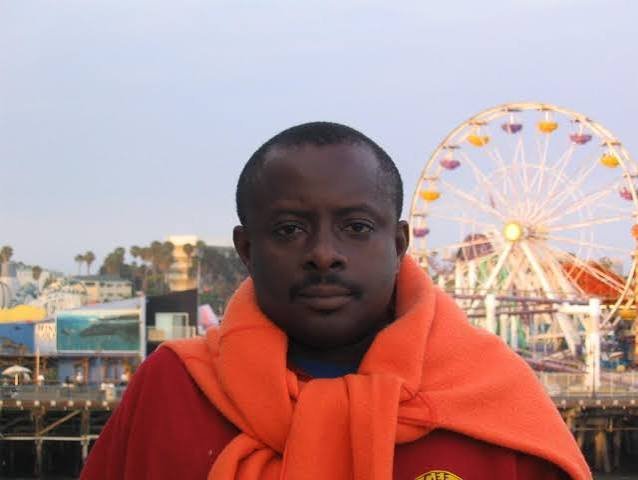

Omololu Falobi: Remembering The Precociousness That Exited 20 Years Ago
By Sakibu Olokojobi
“Precociousness” got into my word bank long ago in my secondary school days. Then I had notebooks in which I jotted “strange words” with their meanings as part of a culture to increase my vocabulary. It was the tradition among some of us then.
Very familiar with the word though, I probably never got to see its meaning in the practical sense until sometime in 1994 when I joined The Punch as a young reporter. It was the tempestuous moment of the newspaper’s prolonged battle against the annulment of June 12 presidential election won by businessman and philanthropist, Chief M.K.O. Abiola. The Punch was one of the newspapers at the forefront of the battle for the restoration of democratic rule. Having just been reopened after one of the many clampdowns by the military government of General Sani Abacha, the management carried out a reorganisation and moved those of us in Top Life, a publication resurrected in apparent defiance of the military’s efforts to gag The Punch and some other newspapers against dictatorship.
As a result of the reorganisation, I found myself on the Features Desk of the Sunday Punch headed by Omololu Falobi who, by every sense of the word, was the true meaning of precociousness. Mr. Remi Ibitola was our Editor.
Young and with a small size fitting his age though, ‘Lolu, as I fondly called him, passed for just any ordinary staff in the newsroom. Unassuming and quiet, ‘Lolu was not given to hysteria. Usually glued to his desk and working assiduously, he rarely moved around except when very necessary. Those were the days when the use of the computers by reporters was a rarity. If at all it was used. On his desk and drawers, were usually heaps of feature articles written in long hands on off-cuts and submitted to him by the reporters under him. He would be engrossed in the editing as we prepared the features pages for the week.
Small (he was the youngest and smallest in size amongst all of us on the desk) as ‘Lolu was, he carried the intelligence of a genius and the confidence imbued by expertise and authority. The management must have seen those values in him before making him the head of the desk. If nothing else proved the management right, the quality of the materials from the Features Desk of the Sunday Punch week in week out was evident. Little wonder, as far as I am concerned, because I saw the thoroughness, expertise and commitment that went into every production. ‘Lolu would not take a wishy-washy material from anyone. Any defective materials could wait for weeks as it would not see the light of the day until it was well prepared and fit for “consumption”.
‘Lolu was highly experienced. The evidence was seen in the richness of his network and the volume of contacts he had. There was hardly an issue for investigation that he wouldn’t have a relevant source or contact for. I had then wondered how he got to know probably almost everyone that mattered and relevant to any story any of us was working on. The answer to the conundrum came to me much later in life when as editor at different levels I did with so much ease too, what made ‘Lolu to be spectacular.
He was scientific too. I recall a time he shared a questionnaire on our desk of about five staff, to fill. It was basically to gauge his leadership, how he could improve and possibly, those of us on the desk could get better in our output.
‘Lolu once spoke about how he entered the university at a tender age. If my memory doesn’t fail me, he was 14 years old when he gained admission into the University of Ife, now Obafemi Awolowo University. He said his brother who had gone to the school with him while processing the admission was queried by someone: “Why did you bring your younger brother along to process your admission?” Little did the person know that the “small boy” was actually the one offered admission.
Far beyond his age. ‘Lolu had brilliance. ‘Lolu had gut. Lolu had confidence and ‘Lolu had exposure.
For example, ‘Lolu did not need a whole page or half a page of a newspaper to express himself, display his writing prowess and command attention. With just one column down, he achieved all that with his Column for the review of arts and entertainment in the Sunday Punch. To me and I guess many others, it was a must read.
Were the story of his life to be told against the backdrop of communication scholarship, hinging it on Diffusion of Innovation Theory would be very apt. He was one of the very few early adopters of the internet phenomenon in The Punch newsroom. He was quick to adopt and explore the benefits that accompanied the arrival of the internet in the newsroom. Upon completing production or the normal work of the day, ‘Lolu would “corner” one of the, I think, two computers having internet connection in the production room and remain on it till the morning of the next day. The results of his exploits showed in the number of fellowships he attended subsequently and other giant strides he made.
Serious minded as ‘Lolu was, his sense of humour could not be ignored. At different times on our desk we would share jokes with everyone laughing our hearts out. The last time ‘Lolu shared a joke with me was at an event at the secretariat of the Nigeria Union of Journalists at Alausa, Ikeja. He had left The Punch and faced his project, Journalists Against AIDS, JAAIDS, which he started in his days in The Punch. We were seeing for the first time after a very long time, upon my return from Abuja to Lagos. He was trying to do some catching up, and he asked: “How many babies have you made now?” and I told him “Two”.
I knew he was up to something, so my answer came with a smile.
He looked at me with scorn and asked: “Why?”
“Why what?” I queried.
“Just two now?!” He exclaimed.
“What about that?” I was sure he was up to a mischief.
We were both smiling already when he blurted:
“Get more men to do the work!”
“Which work?…” I asked and we both burst into a paroxysm of laughter.
It was at that point that he told me the story of a Foreman whom, whenever he saw any of the labourers under his supervision not doing enough, would always suggest that they should “Get more men to do the work.”
He said it was because he felt I was not doing enough that he thought I should “get more men to do the work”.
The story went with another round of laughter.
Incidentally, that was the last time we saw each other.
That was the last time we spoke.
That was the last joke he cracked with me.
I had a fracture following an accident in 2006. I carried the Plaster of Paris for some weeks after which I underwent physiotherapy for some time. It was one of those days of recuperation at home that I heard the sound of a gunshot from far away at my residence off Nureni Yusuf Road, Close to Kollington area in Alagbado, Lagos State. The sound was close enough to make my brother-in-law who was helping to get water from the tank at the back of the house to rush in. Whatever the incident was did not make any meaning to me until a day after when a dear friend and colleague, Semiu Okanlawon, now publisher of NPO Reports, called me and wanted to know the latest about… ‘Lolu’s death!
It was shattering.
The sound of the news was devastating.
When I told him my health condition and that I was not in the know, he told me it happened around my area.
It was then that it dawned on me that the sound of the gunshot the day before was the announcement of the exit of our own dear ‘Lolu.
So, it was for ‘Lolu that the bell tolled.
It’s been 20 years now!
The memory of the beautiful moments you shared remain green.
Your impact in the very short time you stayed here remains fresh.
‘Lolu.
We remember you always, Omololu.
May your gentle soul continue to rest in peace.