


Obasanjo, Obi Demand Rejig Of Democratic Institutions
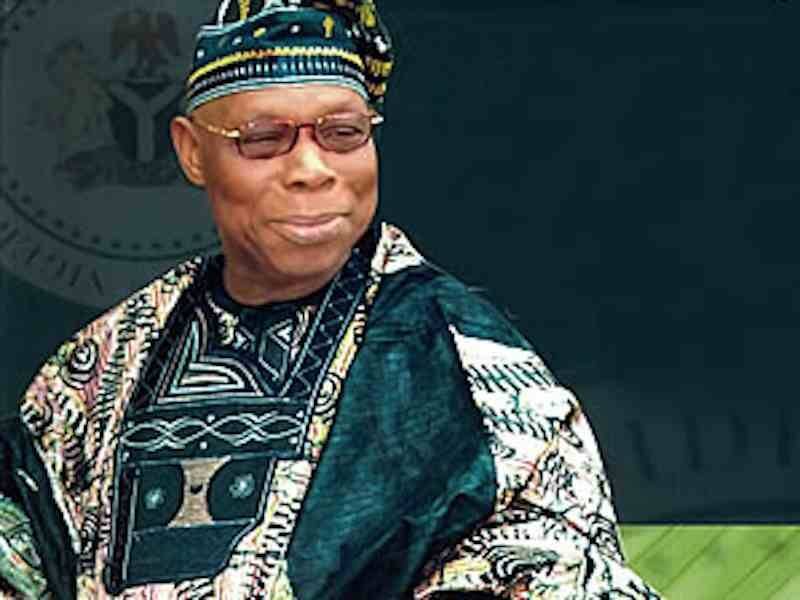
Former President Olusegun Obasanjo and the presidential candidate of the Nigeria Democratic Congress for the 2027 election, Peter Obi, on Tuesday criticised Nigeria’s democratic system and institutions, with Obasanjo calling for an African model of democracy and Obi alleging widespread institutional decay.
They spoke at the 2026 Goodluck Jonathan Foundation Democracy Dialogue in Bauchi, the Bauchi State capital.
The dialogue, organised by the Goodluck Jonathan Foundation, was themed, “Beyond Elections: Can Political Parties and the Judiciary Save African Democracy?”
Obasanjo, who chaired the event, said the Western liberal democracy adopted by many African countries had failed to reflect the continent’s history, culture and values.
He described the system as a “winner-takes-all” model that had encouraged political opponents to see one another as enemies rather than partners in governance.
“The democracy we practise has no African context, no African content, and if you try to use what is not meant for you to serve your purpose, it is like a dress for which you are not measured,” he said.
According to him, the first-past-the-post system had created a situation where winning an election by a single vote could give the victor total control.
“In practice, we have winner takes all, first past the post. If you beat me by one vote, then you take it all and whatever I have does not matter,” the former President said.
Obasanjo said the concept of a “loyal opposition” inherited from Western political systems was difficult to sustain in the African context because opposition was often interpreted as enmity.
“So, what do you do with your enemy? You crush him and destroy him, and that is what we have,” he said.
The former President also warned against neglecting Nigeria’s diversity, saying it was fundamental to the country’s identity.
“Nigeria is what it is because of our diversity. Remove diversity out of Nigeria, you will probably have the Republic of Oduduwa; that will not be Nigeria. Or the Republic of Danfodio; that will not be Nigeria. That diversity must be nourished and be taken care of,” he said.
He also expressed concern over the increasing influence of money and inducements in politics, saying they had risen “by leaps and bounds.”
Obasanjo further lamented the under-representation of women in Nigerian politics, noting that no woman had been elected governor since the beginning of the Fourth Republic more than two decades ago.
He argued that African countries should not be afraid to review the democratic model they inherited from the West, noting that even Western countries were reassessing aspects of their political systems.
“Call it what you like, just make sure it has history, culture and values that are African. You can call it democracy if you like, you can call it African democracy. In that case it will be African with African context and African content,” he said.
On his part, Obi accused some academics, lawmakers, lawyers, religious leaders and judicial officers of contributing to the deterioration of Nigeria’s democratic institutions.
The former Anambra State governor recalled his experience of challenging his election at the Court of Appeal, saying five judges whom he had never met ruled in his favour.
“I went to the Court of Appeal; five judges I had never met gave judgment in my favour. So, look at that and look at what is happening today in Nigeria, where professors are now aiding illiterates to rig elections,” Obi said.
He alleged that lawmakers had weakened electoral laws, while some senior lawyers were defending persons accused of forgery.
“Where lawmakers have removed forgery as an offence in electoral matters, and Senior Advocates of Nigeria are defending forgery. Our religious leaders are now praying for criminal politicians for blessing. We have a crisis,” he said.
Obi also criticised the judiciary, alleging that some judges had become politically aligned.
“And above all, our judges are now singing, ‘On your mandate we stand,’” he said.
Meanwhile, the National Chairman of the Labour Party, Nenadi Usman, urged politicians preparing for the 2027 elections to emulate former President Jonathan’s peaceful conduct during the 2015 presidential election.
Usman said Nigeria’s democracy survived the political tension surrounding the 2015 election because Jonathan conceded defeat to Muhammadu Buhari before the final results were fully announced.
She said Jonathan had demonstrated that political power was not worth the blood of Nigerians.
“Nigeria’s democracy survived the doomsday predictions of bookmakers in 2015 because Jonathan conceded defeat in that year’s election, even before the final votes were tallied,” she said.
Usman urged politicians to place national interest above personal ambition and avoid inflammatory rhetoric that could threaten Nigeria’s democratic stability.
She, however, questioned whether politicians seeking the presidency in 2027 would be willing to make similar sacrifices for national unity.
The LP chairman also described her party as the most structured opposition party in Nigeria, citing its relationship with the Nigeria Labour Congress and the Trade Union Congress.
“With the combined strength of the NLC and the TUC, both of which are constitutional members of the party, no Nigerian political party is better positioned to show the APC government the exit door than the Labour Party,” she said.
The dialogue was attended by Jonathan, former Vice-President Namadi Sambo, Bauchi State Governor Bala Mohammed, former Senate President Anyim Pius Anyim, former Plateau State Governor Jonah Jang, APC Deputy National Chairman (South), Dr Ben Nwoye, and the Emir of Bauchi, Rilwanu Suleiman Adamu.
The event brought together political leaders, constitutional experts and civil society representatives to deliberate on the role of political parties and the judiciary in strengthening democracy and preventing democratic reversals in Africa.