



Nutrition: Shettima Raises Alarm As 41% Of Nigerian Children Stunted
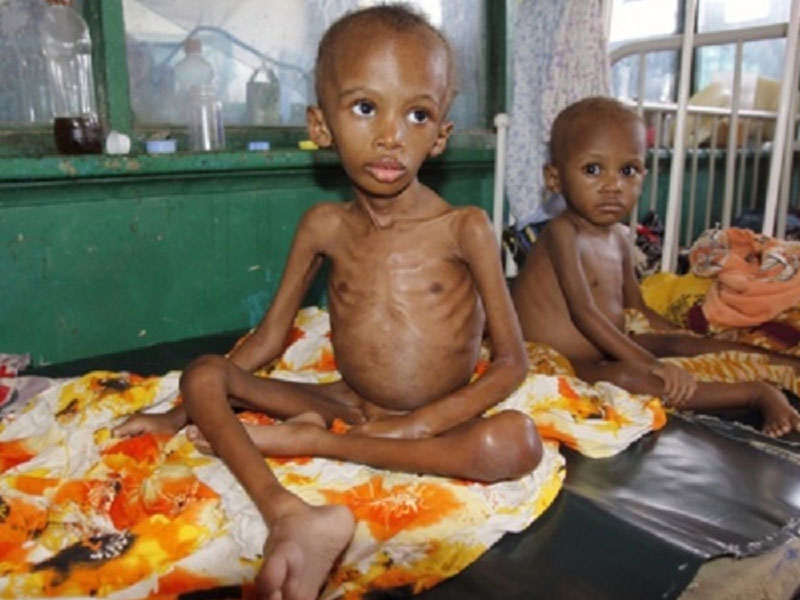
Vice President Kashim Shettima on Tuesday in Lagos raised the alarm over Nigeria’s nutrition crisis, saying it poses a serious threat to the country’s human capital, as latest data show that 41.1 per cent of children under five are stunted, with the figure rising to 58.2 per cent in the North-West.
Shettima, who spoke through his Senior Special Assistant on Public Health and Focal Person on Nutrition, Mrs Uju Rochas-Anwukah, also disclosed that only six per cent of pregnant women completed at least 180 days of iron-containing supplementation in 2024, against a national target of 70 per cent by 2035.
The Vice President spoke at the opening of the 56th Annual Scientific Conference and Annual General Meeting of the Nutrition Society of Nigeria, NSN, in Lagos, themed: “Delivering Better Nutrition for All: Connecting the Dots Across Life Cycle, Systems and Sectors.” where experts called for an urgent, coordinated national response to malnutrition.
Shettima said the statistics underscored the need for government, the private sector, researchers and communities to work together to reverse the country’s nutrition crisis.
“Every nation writes its future twice: first in the body of the child, and later in the institutions that the child will inherit,” she said, representing Shettima.
“Before intelligence becomes achievement, before labour becomes productivity, nutrition has already made its first claim on human possibility.”
He said minimum dietary diversity among women of reproductive age stood at only 30 per cent, against the national target of 60 per cent by 2035.
“That distance should trouble every institution represented here,” she warned.
According to him, Nigeria’s nutrition policies must be judged not by the number of documents produced, but by their impact on households and communities.
He said the National Nutrition Dashboard should serve as an accountability instrument for evidence-led governance, while food fortification must be assessed by its impact on micronutrient deficiencies rather than the number of regulations issued.
Shettima said the Federal Government was pursuing a multisectoral approach through the National Policy on Food and Nutrition 2026–2035 and the Nutrition 774 Initiative, which seeks to take nutrition interventions to all 774 local government areas.
He urged nutrition researchers and professionals to identify implementation failures early and produce evidence capable of influencing government budgets and programmes.
“Good intentions do not feed a child. Budgets must be released on time, expenditures tracked, and every naira judged by measurable community impact,” he said.
Speaking, the Chairman, Board of Trustees of the Nutrition Society of Nigeria, His Highness Muhammadu Sanusi II, said the latest nutrition figures should compel government to treat nutrition as a central development issue.
Sanusi said 19.2 per cent of Nigerian children under five are severely stunted, stressing that nutrition was directly linked to productivity, cognitive development, maternal survival and national resilience.
“Nutrition must therefore be treated as a central pillar of Nigeria’s development agenda, not a peripheral programme reserved for moments of crisis,” he said.
He called for increased and protected nutrition financing, dedicated budget lines, timely releases, expenditure tracking and stronger food fortification compliance.
Sanusi also urged the accelerated passage of the Nutritionists Registration Council of Nigeria Bill, saying effective regulation would strengthen professional standards and protect the public.
In his welcome address, President of NSN, Professor Salisu Maiwada Abubakar, described Nigeria’s nutrition profile as “both a warning and a call to action.”
Abubakar said the country must connect nutrition interventions across the life cycle, linking food systems with health, education, social protection, water and sanitation.
He said the challenge was no longer simply to reduce malnutrition but to transform the systems that produce it, so that Nigerians could access safe, affordable, diverse and nutritious diets.
Declaring the conference open, Permanent Secretary, Lagos State Ministry of Health, Dr Dayo Lajide, said nutrition remained critical to health, human capital development and economic growth.
Lajide said Nigeria was increasingly confronted with the “triple burden” of malnutrition, comprising undernutrition, micronutrient deficiencies, overweight, obesity and diet-related non-communicable diseases.
He called for stronger evidence-based policies, improved nutrition data, strengthened surveillance systems and innovative interventions targeting vulnerable groups, including women, children, adolescents and economically disadvantaged communities.
Also, Director-General of NAFDAC, Professor Mojisola Adeyeye, called for stronger collaboration among regulators, nutrition professionals, academia, industry and policymakers to ensure that Nigerians have access to safe, nutritious and properly labelled foods.
The conference brought together policymakers, researchers, development partners, civil society organisations and nutrition professionals to examine strategies for reversing Nigeria’s malnutrition burden.