


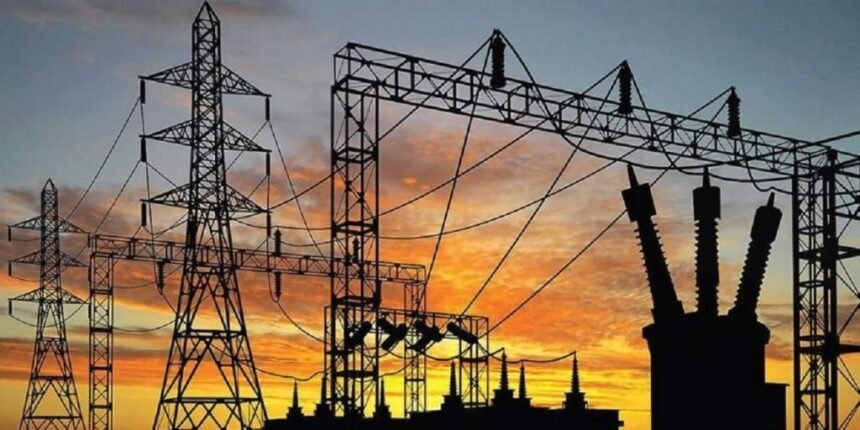


National Grid Crashes 81% To 675MW, As 9 Plants Go Off
Nigeria’s grid electricity supply crashed by 81.5 per cent to 675 megawatts (MW) at 1pm on Monday from 3,647MW, following a drop in the number of power plants supplying the national grid from 21 to 2.
The development prompted electricity distribution companies, including Abuja Electricity Distribution Company (AEDC) and Ikeja Electric, to issue public notices informing customers of supply constraints linked to challenges on the national grid.
Data from the Nigerian Independent System Operator (NISO) showed that 21 power plants were supplying electricity to the grid before the incident at noon, when total generation stood at 3,647MW.
However, by 1pm, the number of plants on the grid had dropped to 12, while electricity supply plunged to 675MW, representing a loss of 2,972MW within one hour.
The plants that went offline included Azura, Egbin, Jebba and Kainji hydroelectric power plants.
The sharp decline followed relatively higher supply levels earlier in the day, with the grid recording 4,331MW at 1am and 4,458MW at 6am. Supply subsequently fell to 3,647MW by noon before experiencing the steep drop at 1pm.
Electricity supply later recovered to 2,150MW by 5pm, representing an improvement of 1,475MW from the 1pm level, although it remained significantly below the morning peak.
In a public notice issued on Monday, AEDC informed customers that electricity supply from the Transmission Company of Nigeria (TCN) had been interrupted due to a grid-related challenge.
The company said TCN’s technical team was working to restore grid stability, adding that power supply was gradually being restored to its feeders.
“We assure you that efforts are ongoing to restore full supply across our franchise area as soon as the situation permits,” AEDC said, while apologising for the inconvenience caused by the interruption.
Similarly, Ikeja Electric attributed reduced electricity supply across its network to a shortfall in the volume of power allocated to it from the national grid.
In its notice to customers, the distribution company said it was engaging relevant stakeholders to improve available supply.
It added that it would continue to distribute the electricity received from the grid as efficiently and equitably as possible.
However, NISO said it had stabilised the national grid following multiple trippings on the 330-kilovolt (kV) transmission network.
In a statement on Monday, the system operator said the incident occurred at approximately 12:40pm on October 19, 2026.
It said it immediately implemented corrective measures in collaboration with TCN to stabilise the power system and restore normal operations.
According to NISO, restoration efforts had been successfully completed and the national grid had returned to normal operation.
The operator clarified that the incident affected only a section of the grid, contrary to unverified reports and claims.