


FG Targets December Completion Of Kaduna-Kano Rail Line
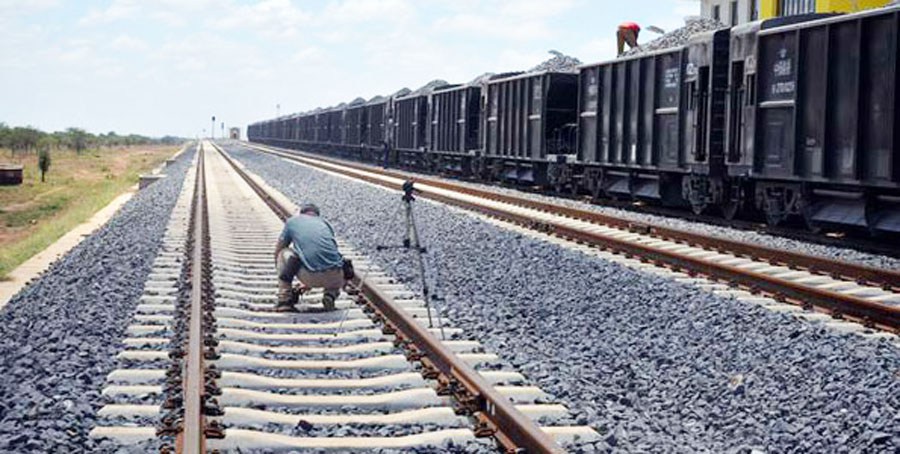
The Federal Government has said the Kaduna-Zaria-Kano railway route will be completed and ready for operation by December as part of ongoing efforts to revive the country’s rail transportation system.
The Permanent Secretary, Ministry of Transportation, Funsho Adebiyi, disclosed this on Monday in Abuja during the 19th National Council on Transportation.
Adebiyi said the Federal Government was intensifying efforts to expand the railway network and reduce the heavy pressure on the nation’s roads, noting that about 98 per cent of Nigerians depended on road transportation.
He said, “No nation jokes with transportation. So out of these four means of transportation made available, air, road, rail and water, you will discover that in Nigeria, 98% of Nigerians depend absolutely on road as a means of transport as at today.”
According to him, the heavy dependence on roads has subjected the nation’s road infrastructure to excessive traffic and overloading. He said even Nigerians who travelled by air still relied on roads to access airports, further increasing pressure on the road network.
Adebiyi continued, “Somebody else may say that transport by air, that the passenger statistics, stands at about maybe 15 million passengers or 20 million per annum. And you might think that that’s 20 million over maybe 200 million Nigerians. Somebody can now say 10% of Nigerians travel by air.
“And even when they travel by air, you will still land on roads, isn’t it? To access the airport is still by road. So you can see that our road pavements are under significant stress. The absolute loads it carries are mostly beyond its design capacity.”
The permanent secretary said the Federal Government was therefore seeking to shift some of the pressure from roads to rail, particularly for freight transportation.
“There is also the need to empty the road pavements of the excess loads. Hence, we talk about rail development. Now, on rail development again, I can say that rail development is getting born again in Nigeria,” he added.
Adebiyi said several railway routes had already been completed and were operational, including Port Harcourt-Aba, Lagos-Ibadan, Abuja-Kaduna and Warri-Itakpe.
He added that the Kaduna-Zaria-Kano route was nearing completion and would be available for operation by December.
He said, “Along the line, the railway corporation nosedived. And thank God we have an MD now that the entire structure is working now. Rail transport is wearing a new look; Port Harcourt to Aba, Lagos to Ibadan, Abuja to Kaduna, Warri to Itakpe have been completed and are operational. Kaduna to Zaria, Zaria to Kano is almost completed. And by December, by God’s grace, it will be available for operation again.”
The permanent secretary also disclosed that work was at an advanced stage on the Kano-Daura-Katsina route, with completion expected by December.
He said the Katsina-Jibia-Maradi route was expected to be ready by the same period next year, while the Kano-Dutse railway project would also be completed around the same time.
“If you’re from Kano, to Daura to Katsina is also at an advanced stage. And by December this year, that sector will also be completed. By this time next year, we’re talking about from Katsina to Jibia to Maradi that will be ready for completion at that time. Thereafter, I’m telling you, all these are already ongoing. The one from Kano to Dustse will be completed around the same time.”
Adebiyi said the development of rail freight services was already helping to reduce the number of heavy-duty vehicles on major highways.
He cited the transportation of containers from the Apapa Port to the Ibadan dry port by rail as an example, saying the development had removed dozens of trailers from the Lagos-Ibadan highway.
He further stated, “Efforts are seriously ongoing to ensure that the railway system comes back to life. I was in Apapa port and I watched a train being loaded. And they loaded 40-foot containers on the train to move it from Apapa port to Ibadan dry port. You have technically removed 33 trailers from the Lagos-Ibadan road. And you have also decongested that sector. The accident rate has significantly reduced.”
He said the planned extension of rail services from Ibadan to Minna would further reduce the pressure on roads by allowing containers to be moved closer to their destinations by rail.
“Very likely we will pick up from where we stopped in Ibadan to as far as Minna. By the time that one is completed, because in each of those things, you now have a dry port where each container can be moved and offloaded. So the distance to be covered by this truck will now be from the train station into the city where their services are needed to be delivered.”
According to him, expanding rail freight services would help prolong the lifespan of roads, reduce accidents and improve safety.
“This simply means what? The pavements will last longer. The accident rates will be reduced. The risks on our roads will be reduced. Even the lifespan of the road pavement will be reduced”, he stated.
Adebiyi also highlighted the employment opportunities being created by the ongoing railway projects, saying thousands of young Nigerians had been engaged on some of the routes.
He said, “Great things are underway in the transport sector in Nigeria. Having said that, I want to most respectfully bring to your attention that the importance and benefits of transportation include, but are not limited to, promotion of economic growth, improving accessibility, facilitating trade and commerce, supports employment.
“Despite it may surprise you that transport sector, the volume of labour work generated in the transport sector will amaze you. On Kano Maradi alone, we have recruited about 4,000 staff. 4,000 youth are working there. That’s fantastic. And on Kaduna to Kano, we have well over 5,000 staff that work on that project. That’s about 9,000 youth put to work.”
Also speaking at the event, the representative of the Head of the Civil Service of the Federation, Ibrahim Ishaku, said an integrated transportation system was essential to achieving Nigeria’s economic ambitions.
He said the National Council on Transportation had provided a platform for policy dialogue and coordination in the sector for almost two decades.
“For almost two decades, the National Council on Transportation has provided a platform for policy dialogue, coordination, and collective action on the transportation sector.
Ishaku said transportation was critical to economic growth, trade, investment and industrial development. He said an efficient multimodal transportation network would be necessary for Nigeria to achieve the Federal Government’s ambition of building a $1tn economy by 2030.
“As Nigeria pursues its ambition of building a US$1 trillion economy by 2030, as articulated in the Renewed Hope Agenda of President Bola Tinubu GCFR, President and Commander-in-Chief, an efficient integrated transport system must remain central to our national development strategy.”
He, however, said infrastructure alone could not transform the sector, stressing the need for effective regulation, strong institutions, reliable data, innovation and a skilled workforce.
“We must also build transport systems that are climate-resilient, sustainable, technology-enabled, and responsive to the changing needs of our population and economy. Equally important is the availability of a competent and professional workforce capable of planning, regulating, coordinating, and managing these increasingly complex systems.”
Ishaku added, “Indeed, the effectiveness of government policies ultimately depends on the capacity of the institutions and the people responsible for implementing them. A high-performing transport sector therefore requires not only infrastructure and investment, but also strong institutions, effective regulation, intergovernmental coordination, reliable data, innovation, and a skilled public service.”