


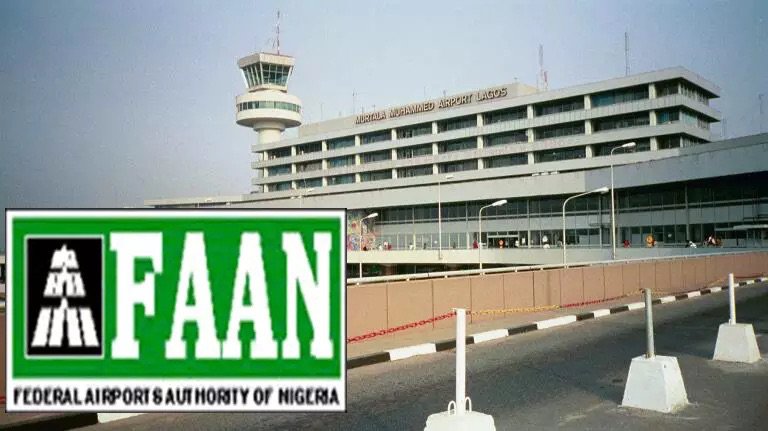


FAAN Denies Ordering 2020 Cars For Airport Taxis
The Federal Airports Authority of Nigeria on Friday dismissed claims circulating on social media that it directed airport taxi operators to replace their vehicles with 2020 model cars before they could continue operating at the nation’s airports.
The clarification came after a viral video showed some airport cab drivers appealing to President Bola Tinubu and Nigerians to intervene, alleging that FAAN had introduced a policy compelling them to purchase vehicles valued at between N18m and N30m despite the prevailing economic hardship.
In the video, one of the drivers claimed that the authority was insisting on 2020 model vehicles as part of a new app-based airport taxi system, describing the requirement as unrealistic for many operators struggling to remain in business.
The video sparked widespread reactions on social media, with many Nigerians expressing sympathy for the drivers, while others argued that airport transport services should meet the higher standards expected at international airports.
Responding to the controversy, FAAN’s Director of Commercial and Business Development, Ms Adebola Agunbiade, said the claims were false and did not reflect the authority’s policy.
She said, “Regarding the video circulating online, the claim that the main cause of the drivers’ actions is not accurate. The footage shows planned resistance by car hire operators who refused to register on the Airport Car Hire Rank Management System. Those drivers were working to prevent the soft and pilot launches of the system at the Murtala Muhammed International Airport. This incident is not related to any policy regarding vehicle model year.”
She explained that, contrary to the allegations, FAAN had never directed operators to procure 2020 model vehicles before joining the Airport Car Hire Rank Management System.
Agunbiade further said, “It is incorrect to say that FAAN asked drivers to change their vehicles to a minimum of the 2020 model because of the introduction of ACHRAMS. In fact, one of the conditions laid down by the Authority for registration on the app is that drivers must operate vehicles manufactured in 2012 or above.”
She disclosed that the vehicle standard had been communicated to operators since 2024, with an initial compliance deadline of January 1, 2026, which was later extended to June before being shifted again to October 1, 2026, to allow more operators sufficient time to comply.
The FAAN director also dismissed reports that the authority planned to remove about 60 per cent of existing airport taxi drivers to make way for new entrants under the digital platform.
“It is important to note that FAAN is not planning to clear only 60 per cent of existing drivers to pave the way for ACHRAMS. The intention is to clear all drivers, provided they comply with the laid-down standards,” she said.
She further stated that virtually all existing airport car hire operators at the Murtala Muhammed Airport had already been cleared to operate on the platform, except for two companies whose union allegedly instructed them not to participate in the initiative and instead develop independent applications.
According to Agunbiade, the drivers featured in the viral video were likely members of those companies, while many other operators outside the National Union of Private Cab Operators had embraced the new system and were already participating in its pilot phase.
She also addressed concerns raised by e-hailing drivers who feared they would be denied access to airport operations following the rollout of ACHRAMS.
Agunbiade explained that FAAN was concluding agreements with Bolt and Uber to integrate their platforms into ACHRAMS, adding that once the agreements were finalised, both companies would continue operating within the airports under the new framework.
She, however, explained that, pending the completion of those agreements, the e-hailing companies did not currently have legal approval to pick up passengers from airport terminals, making any temporary suspension strictly an operational and regulatory issue rather than an outright ban.