


Ebola: Ekiti Health Ministry Issues Advisory To Citizens
The Federal Government of Nigeria through the Minister of Health and Social Welfare, has confirmed one case of Ebola disease in the Federal Capital Territory (FCT), following laboratory confirmation today, 20 October 2026.
According to the Minister, the patient is a woman who recently arrived in Nigeria on an international flight from Uganda, who was admitted to a private hospital in the FCT, where she received care for several days before the diagnosis was confirmed. She is reportedly in isolation and receiving medical care.
The Nigeria Center for Disease Control and Prevention has commenced contact tracing with 44 close contacts identified. Public health teams are identifying and monitoring people who may have been exposed, including healthcare workers, patients, caregivers and travel contacts. Surveillance has been intensified, and the hospital is receiving immediate support to strengthen infection prevention and control measures.
The FG has called on all public and private healthcare facilities nationwide to be on high alert. Healthcare workers must maintain a high index of suspicion, promptly identify and isolate suspected cases, observe strict infection prevention and control measures, and immediately report suspected cases to public health authorities.
Readiness and Preparedness efforts in Ekiti State
The WHO confirmed the Ebola outbreak in Democratic Republic of Congo on May 17, 2026 and thereafter declared it a public health event of international concern. After the alert by the NCDC, Ekiti State has carried out the following Preparedness activities:
• Increased public awareness through engagement of stakeholders (Health workers, Community leaders, Media Officer, FBOs, CSOs and Traditional Rulers) on Ebola Virus Disease preventive measures and prompt reporting. Radio jingles have been produced and being aired on 2 radio stations while IEC materials (posters) have been produced and distributed.
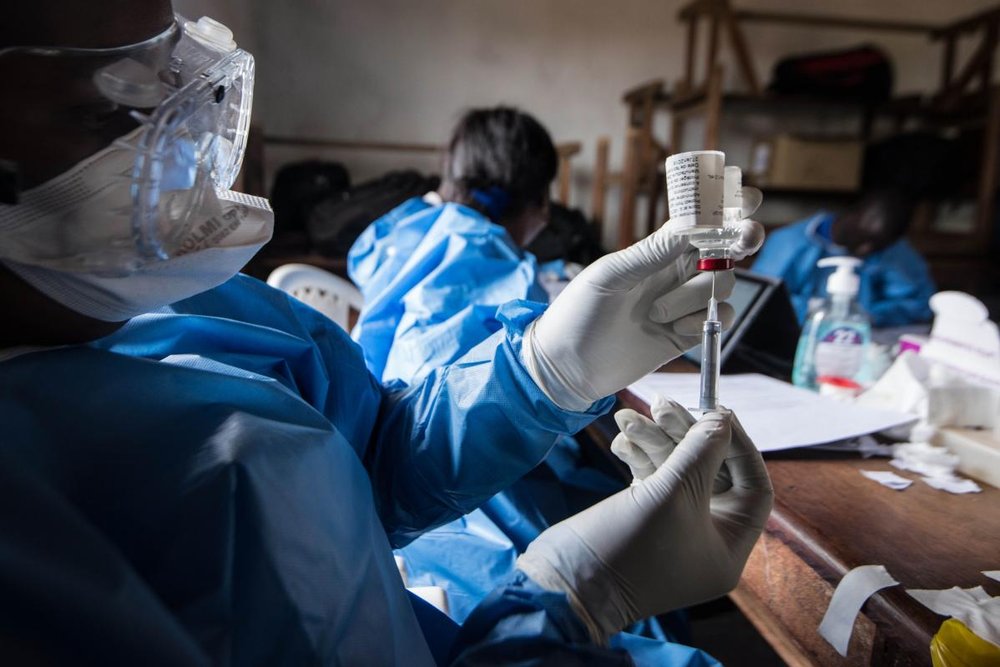
• Training of Laboratory personnel on Ebola sample collection, handling and transport
• Training of State and LGA Surveillance Team on EVD Surveillance and Response to enhance surveillance and active case search.
• Inauguration of Ebola Virus Disease Technical Working Group (TWG). An emergency TWG meeting was held on Tuesday 13th of October following the report of confirmation of a case in Kenya. This was to asses state readiness and expedite other readiness activities.
• Orientation of airport officials and environmental health officers on screening and triaging of passengers at the airport and other points of entry.
• Improvement of capacity of healthcare workers through functional/simulation exercise (drill) at Treatment Centre (Federal Teaching Hospital, Ido Ekiti), training of Healthcare Workers on EVD Case Management and Infection Prevention and Control, and training of State Burial Team on safe and dignified burial,
• Personal Protective Equipment such as gloves, facemasks and other laboratory consumables have been procured and stockpiled in readiness.
What Ekiti people Should Know and Do
Ebola spreads through direct contact with the blood or body fluids of someone who is sick with the disease or has died from it, or through contact with contaminated materials. A person with Ebola cannot spread the disease before symptoms begin.
What to look out for
Anybody with sudden onset of fever, severe weakness and other symptom with a travel history to Democratic Republic of Congo, Uganda, Kenya or other countries with suspected or confirmed cases of Ebola. Or anybody with unexplained bleeding or sudden death who has a travel history to these countries.
We advise everyone to:
1. Remain calm but vigilant. There is no need for panic.
2. Practise regular hand hygiene and avoid contact with the body fluids of anyone suspected to have Ebola.
3. Watch for symptoms, including fever, severe weakness, headache, vomiting and diarrhoea, particularly following possible exposure.
4. Report any possible exposure immediately, even if you feel well. If you develop symptoms, avoid close contact with others and call public health authorities for guidance before visiting a healthcare facility.
5. Cooperate with public health teams. Anyone contacted during contact tracing, including relevant airline passengers, should provide the necessary information and follow public health advice.
6. Avoid rumours and stigma. Share only verified information from official health authorities.
Our Assurance to Ekiti people
Nigeria successfully contained Ebola in 2014, and we have the experience and public health systems to respond to this case. However, containing Ebola requires everyone to play their part.
The Ekiti State Government under the leadership of His Excellency, Biodun Abayomi Oyebanji promises to protect healthcare workers, patients and the wider public.
We urge Ekiti people to remain calm, stay vigilant and cooperate with public health authorities. Early detection, prompt reporting and everyone’s cooperation are critical to preventing further spread.
Emergency Numbers
If you see anyone with signs and symptoms of Ebola, especially if the person has a travel history to any Ebola affected country or Abuja, please report to the nearest General Hospital or call the following Numbers immediately:
07049204288
08160193629
07049204334