


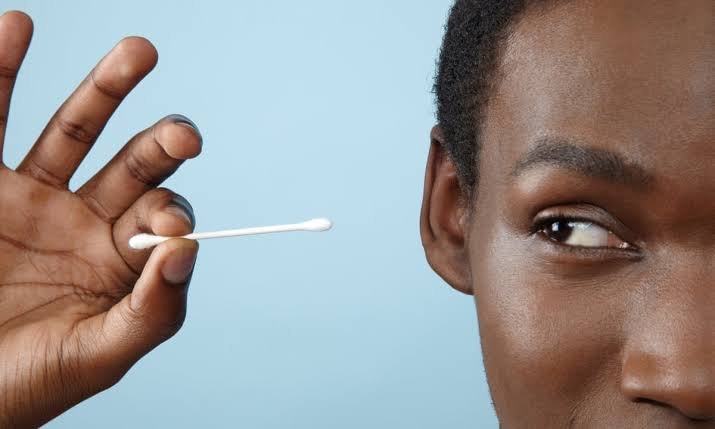


Don Warns Against Cleaning Ears With Cotton Buds
A Professor of Oto-Rhino-Laryngology at Olabisi Onabanjo University, Ago-Iwoye, Ogun State, Ayodele Sogebi, has warned Nigerians against cleaning their ears with cotton buds, sticks and other objects, saying the practice could cause injuries, infections and hearing impairment.
Sogebi, of the Department of Surgery, Faculty of Clinical Sciences, gave the warning on Tuesday while delivering the 131st inaugural lecture of OOU, titled, “Having Ears, Why Then Do They Not Hear? The Causes and Effects of Hearing Impairment Among Nigerians.”
He said the ear had a natural self-cleaning mechanism and that inserting objects to remove wax or relieve itching was unnecessary and potentially harmful.
The professor said many Nigerians mistakenly regarded earwax as dirt that needed to be removed regularly, whereas it was a natural substance that helped protect the ear.
He said, “Cleaning the ear is wrong. In fact, putting anything inside the ear, whether you are using it to clean or scratch it, should be discouraged.
“The earwax, produced by glands in the ear canal, has cleansing, antibacterial and antifungal properties that help protect the ear against infections.
“Attempts to remove the wax manually could disrupt the ear’s natural cleaning process, push wax deeper into the canal and cause impaction, which could affect hearing.”
Sogebi warned that inserting objects into the ear could also cause physical injuries, introduce foreign bodies and lead to complications, particularly when people attempted to remove lodged objects without professional assistance.
He urged Nigerians to abandon the habit and seek medical attention if they experienced ear discomfort, itching or hearing difficulties.
The don noted that foreign-body insertion was a significant cause of ear injuries, particularly among children, although adults were also involved in the practice.
He also identified excessive noise exposure as a major risk factor for hearing impairment, warning Nigerians against listening to loud music through earpieces and headphones.
The surgeon said prolonged exposure to loud sounds could progressively damage the sensory hair cells in the inner ear, leading to hearing loss that might not be noticeable until significant damage had occurred.
“The damage accumulates over the years, and when a significant number of those hair cells have been destroyed, the person may no longer hear properly,” he said.
He described noise pollution from traffic, poorly maintained vehicles, unnecessary honking and loudspeakers at motor parks as a serious public health concern.
Sogebi called on the government to strengthen noise regulation and urged motorists and commercial transport operators to reduce unnecessary noise.
He also advised workers in noisy environments, including construction sites, factories and music venues, to protect their hearing with earplugs or earmuffs.
The professor further raised concerns about the burden of hearing impairment in Nigeria, disclosing that an estimated 11.2 million Nigerians were living with hearing loss as of 2021.
He said hearing impairment was not always obvious because affected people might still hear sounds but struggle to understand conversations or respond appropriately.
“What I am saying is that we should not just assume that when people hear, they are hearing properly. So many people hear, but more often than not, they are not hearing well, and they may not even know it,” he said.