


COAS Urges Soldiers To Build Mental Resilience, Strong Character
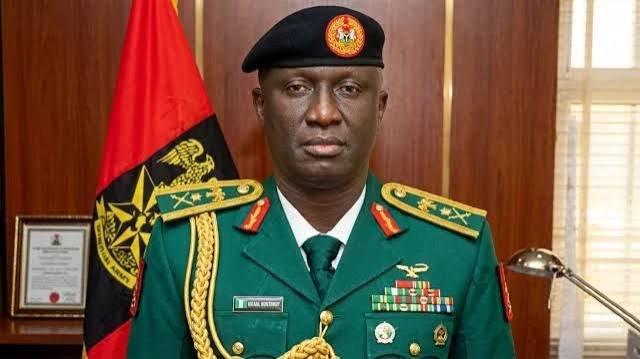
The Chief of Army Staff, Lt. Gen. Waidi Shaibu, has urged Nigerian Army personnel to develop mental resilience, ethical discipline and strong character to effectively confront contemporary security threats.
Shaibu made the call on Wednesday at a sensitisation seminar on Warrior Ethos, Post-Traumatic Stress Disorder management, and drug and substance abuse in Kachia, Kaduna State.
The COAS, represented by the General Officer Commanding, 1 Division Nigerian Army and Commander, Sector 1, Operation Fansan Yamma, Maj. Gen. Abubakar Wase, said modern military operations required more than physical fitness, weapons proficiency and tactical competence.
He said soldiers must also possess the mental strength and discipline required to remain effective under prolonged and extreme operational pressure.
According to him, the Army’s operations against terrorism, insurgency, banditry, militancy and other asymmetric threats expose personnel to considerable physical, psychological and moral pressures.
“Contemporary military operations demand more than physical fitness, weapon proficiency and tactical competence. They require mental resilience, strength of character, discipline and the capacity to remain effective under prolonged and extreme operational pressures,” Shaibu said.
He stressed that mental readiness was an integral part of combat preparedness, adding that psychological resilience was as important as tactical proficiency.
Shaibu identified Warrior Ethos, awareness and management of PTSD, and prevention of drug and substance abuse as interconnected issues affecting soldiers’ fighting spirit, unit cohesion, welfare and mission success.
He said Warrior Ethos must remain the moral and psychological foundation of the Nigerian Army by inspiring troops to remain courageous, disciplined and resolute in the face of adversity.
However, the Army chief warned against interpreting Warrior Ethos as a demand for soldiers to suppress genuine psychological difficulties or suffer in silence.
Shaibu urged commanders at all levels to create an environment where soldiers could raise legitimate concerns early and access appropriate support without fear of unnecessary stigma.
He also charged commanders to know their troops, understand behavioural changes and identify signs that prolonged exposure to combat operations might be affecting their performance or wellbeing.
The COAS described drug and substance abuse as a serious threat to military discipline, judgment, health, unit cohesion and operational effectiveness.
He called for stronger preventive and educational programmes, as well as appropriate testing, counselling, rehabilitation and disciplinary measures where necessary.
Earlier, the Chief of Army Transformation and Innovation, Maj. Gen. Peter Augustine, represented by his deputy, Maj. Gen. I.O. Bassey, said the seminar was organised to address challenges arising from the physical and psychological demands of contemporary military operations.
Augustine said the engagement was in line with the COAS’s leadership philosophy, particularly his emphasis on leadership and mentorship, stronger unit cohesion and improved operational efficiency.
He said the Army’s transformation agenda should go beyond equipment, technology and doctrine to also prioritise the human element.
“The Nigerian Army must remain a modern, adaptive and people-centred force, capable of responding effectively to current and emerging challenges,” he said.
The seminar, themed “Warrior Ethos: Building Ethical Leadership and Unit Cohesion,” featured lectures on intensifying Warrior Ethos and mental toughness, the effect of PTSD on Nigerian Army operational effectiveness, and the impact of drug and substance abuse on military operations.
The seminar also featured interactive sessions involving military officers and representatives of relevant agencies, with emphasis on psychological resilience, professional discipline, unit cohesion and operational effectiveness.