


CBN Retains Interest Rate At 23%, Warns Of Election Spending Risks
The Monetary Policy Committee of the Central Bank of Nigeria has retained the benchmark interest rate at 23 per cent, citing inflationary risks arising from anticipated election-related spending, increased festive season expenditure and disruptions to global energy supplies.
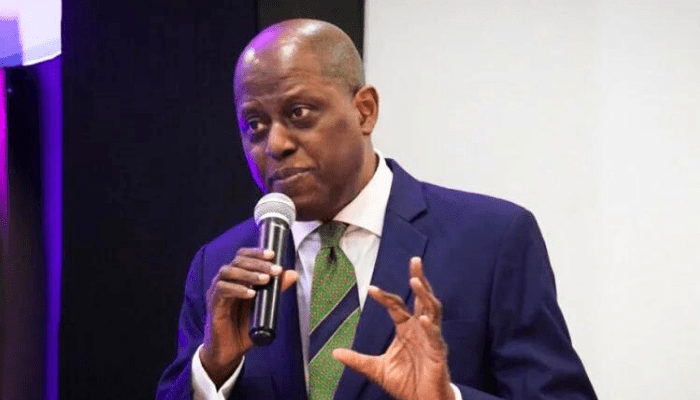
The CBN Governor, Olayemi Cardoso, announced the decision on Tuesday at the end of the committee’s 308th meeting, held on November 23 and 24, 2026, in Abuja, with 10 members in attendance.
Cardoso said, “The committee decided as follows: retain the Monetary Policy Rate at 23 per cent.”
The committee also retained the Standing Facilities Corridor at plus 50 and minus 300 basis points around the MPR, while maintaining the Cash Reserve Requirement for deposit money banks at 45 per cent, merchant banks at 16 per cent and non-Treasury Single Account public sector deposits at 75 per cent.
The decision follows the 350-basis-point reduction in the benchmark interest rate from 26.5 per cent to 23 per cent in September 2026.
Cardoso explained that although headline inflation had moderated for five consecutive months, prevailing economic risks necessitated maintaining the current monetary policy stance to consolidate the gains recorded in price stability.
He said, “The MPC observed that the anticipated increase in spending from the end-of-year festive season and election-related activities could impact aggregate demand with likely upward pressure on prices.”
The committee also expressed concern over the ongoing Middle East conflict, which could sustain pressure on energy prices, and adverse weather conditions that could undermine food supply.
Nigeria’s headline inflation declined to 14.06 per cent in October from 14.63 per cent in September, while core inflation fell to 10.78 per cent from 12.95 per cent.
Food inflation also moderated to 19.13 per cent from 19.59 per cent, reflecting easing price pressures on processed food and farm produce following the commencement of the harvest season.
Cardoso attributed the sustained moderation in inflation to exchange rate stability, improved monetary policy transmission and the restrictive monetary policy stance.
He added that the Composite Purchasing Managers’ Index rose from 53 points in September to 53.2 points in October, reflecting improved activities across the industrial, agricultural and services sectors.
Responding to questions from journalists, Cardoso disclosed that the September interest rate adjustment was yielding the intended results, with interbank lending rates moving closer to the lower band of the Standing Facilities Corridor.
“What we’re finding is that the interbank rates are moving closer to the lower band of the corridor, and that’s exactly where we want to be,” he said.
The governor added that rates on Open Market Operations instruments and Treasury bills had moderated, while the gap between the benchmark interest rate and prevailing market rates had narrowed considerably.
He also disclosed that credit to the private sector was gradually recovering, adding that the apex bank would continue to monitor borrowing costs.
“We are very pleased that, really, the amount of credit going out to the private sector has gradually begun to come up,” Cardoso said.
He maintained that the September adjustment was intended to align the benchmark rate with market realities rather than signal a departure from the restrictive monetary policy stance.
On recent pressure on the naira and declining external reserves, Cardoso dismissed concerns over the sustainability of exchange rate stability, describing the developments as temporary and largely seasonal.
Nigeria’s gross external reserves stood at $`54.02bn as of November 17, 2026, sufficient to cover 10.26 months of imports of goods and services.
The governor attributed the recent volatility to year-end portfolio adjustments by foreign investors, increased foreign exchange demand by domestic businesses seeking to hedge against future risks and rising election-related expenditure.
“These are all seasonal. And we believe very strongly that as we go into the next year, we will find a major moderation in the volatility that you have seen,” he said.
Cardoso also disclosed that diaspora remittances exceeded `$900m in the preceding month, adding that Nigeria’s current account surplus and sustained remittance inflows would strengthen external buffers.
He assured Nigerians that the apex bank would do everything possible to preserve exchange rate stability.
Speaking on the recently signed Memorandum of Understanding between the CBN and the Nigerian National Petroleum Company Limited, Cardoso said the agreement followed months of consultations between both institutions.
He explained that the partnership would improve transparency in the management of oil-related foreign exchange inflows, deepen the foreign exchange market, strengthen external reserves and support energy project financing.
The governor added that the CBN would deploy its advisory expertise and convening power to support the national oil company’s operations.
On the outlook for 2027, Cardoso promised policy consistency, stronger coordination between fiscal and monetary authorities, sustained banking sector stability and further improvements in monetary policy transmission.
“Our goal is single-digit inflation, and we will not stop until we get there. We will continue to ensure that we do everything possible to move inflation to single digits,” he said.
The committee projected a positive domestic economic outlook, supported by improved crude oil production and sustained expansion across agriculture, services and industry.
However, it warned that elevated global energy prices, trade policy uncertainty, supply chain disruptions, cyber threats and diminishing fiscal space remained risks to the global economy.
Financial market analysts had warned that renewed pressure on the naira, declining external reserves and rising global interest rates could constrain further monetary policy easing despite moderating domestic inflation.