


CBN Holds Benchmark Interest Rate At 26.5% Again
The Monetary Policy Committee of the Central Bank of Nigeria on Tuesday retained the Monetary Policy Rate, the benchmark interest rate, at 26.5 per cent for the second consecutive meeting, citing renewed geopolitical tensions in the Middle East and persistent inflationary risks despite a slight moderation in domestic inflation.
The decision was announced by the Governor of the Central Bank of Nigeria, Olayemi Cardoso, at the end of the MPC’s 306th meeting in Abuja, which was attended by all 11 members.
Cardoso said the committee resolved to “retain the monetary policy rate at 26.5 per cent.”
The MPC also retained the standing facilities corridor around the MPR, the Cash Reserve Ratio at 45 per cent for Deposit Money Banks, 16 per cent for Merchant Banks, and 75 per cent for non-Treasury Single Account public sector deposits.
The decision follows the committee’s previous decision to hold rates after implementing a 50-basis-point cut in February 2026.
The latest decision came despite a marginal decline in Nigeria’s headline inflation rate.
According to the National Bureau of Statistics, headline inflation eased to 15.91 per cent in June 2026 from 15.93 per cent in May, marking its first decline after three consecutive monthly increases.
Inflation had risen from 15.06 per cent in February to 15.38 per cent in March, 15.69 per cent in April and 15.93 per cent in May.
Explaining the committee’s decision, Cardoso said members considered the balance of risks and concluded that maintaining the current policy stance remained the most appropriate option.
“The committee’s decision to maintain the current policy stance followed a thorough assessment of the balance of risks. Although headline inflation moderated marginally in June 2026, global uncertainties have heightened due mainly to the renewed hostilities in the Middle East.
In view of the evolving developments, maintaining a cautious monetary policy stance remains appropriate,” he said.
He added that the committee carefully assessed the renewed conflict in the Middle East because of its implications for global energy prices and the possible transmission to domestic inflation.
The CBN governor said, “In arriving at its decision, the committee noted the recent resurgence of hostilities in the Middle East, with particular attention to its spillover effects on global energy prices and the potential pass-through to domestic inflation.”
Cardoso, however, said the Nigerian economy had remained resilient to external shocks, reflecting the impact of reforms implemented by both the fiscal and monetary authorities.
“Available evidence suggests that the Nigerian economy has remained largely resilient to the external shocks, reflecting the gains from prior reforms implemented by the fiscal and monetary authorities,” Cardoso said.
He said retaining the current policy stance would allow the committee to monitor incoming economic data and assess the direction of inflation before taking further action.
The CBN governor also acknowledged the Federal Government’s renewed commitment to policy coordination, saying closer collaboration between fiscal and monetary authorities had helped moderate the domestic impact of the Middle East crisis.
According to him, stronger alignment between fiscal and monetary policies would enhance policy effectiveness and support broader macroeconomic objectives.
The committee also commended the implementation of Executive Order 9, describing it as capable of strengthening Nigeria’s macroeconomic fundamentals, while urging the government to sustain efforts to increase crude oil production and accelerate reforms in the solid minerals sector to diversify public revenue.
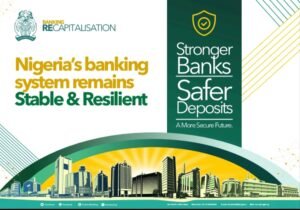
It further welcomed the outcome of the banking sector recapitalisation exercise, saying it had improved the resilience of the financial system as reflected in key prudential and financial soundness indicators, while urging the CBN to sustain effective supervision to preserve financial stability.
On inflation, Cardoso said the moderation in headline inflation was driven by lower core inflation, although food prices continued to rise.
According to him, food inflation increased to 17.52 per cent in June from 16.96 per cent in May due to supply constraints in major food-producing areas and elevated transportation costs. Core inflation, however, moderated to 15.92 per cent from 16.82 per cent, largely because of exchange rate stability.
He added that the 12-month average inflation rate fell for the sixth consecutive month to 17.63 per cent in June from 18.36 per cent in May, while month-on-month headline inflation also eased to 1.66 per cent from 1.75 per cent.
Responding to questions after the briefing, Cardoso said the apex bank remained committed to returning inflation to single digits despite the renewed geopolitical shocks.
He acknowledged that the renewed conflict in the Middle East had complicated that outlook.
Nevertheless, he said the moderation in headline inflation suggested that previous policy measures were producing the desired results.
He said, “Headline has moderated. So that gives us an indication of the fact that the tools that we have implemented so far are bearing effect.”
Cardoso reiterated that the CBN would continue collaborating with the Federal Government to contain inflation.
“Collaboration between the fiscal and the monetary at a time like this cannot be overemphasised. We will do what we need to do to ensure that we can contain rising inflation in any manner and bring it to the single digit that we have said earlier,” Cardoso said.
He argued that restoring macroeconomic stability was laying the foundation for stronger investment and economic growth.
Cardoso said, “One of the most fundamental shifts that has taken place over the past couple of years is the stability of our system. Without that stability, you don’t get investment. And without that investment, you don’t get the growth that we need.”
The CBN governor said Nigeria’s gross external reserves increased to 50.47bn at the end of May, driven mainly by crude oil-related tax receipts and third-party inflows.
According to him, the reserves are sufficient to finance about 11 months of imports of goods and services, well above the international benchmark of three months.
He also said real Gross Domestic Product expanded by 3.89 per cent in the first quarter of 2026, supported mainly by the non-oil sector, while the Composite Purchasing Managers’ Index improved to 50.1 points in June from 49.6 points in May, signalling renewed expansion in business activity.
Responding to a question on the International Monetary Fund’s assessment that the naira is undervalued, Cardoso said the CBN would continue to support a transparent foreign exchange market rather than target a particular exchange rate.
He said the eventual value of the naira would depend on stronger economic fundamentals, including higher oil exports, increased foreign direct investment and improved domestic productivity.
“At the present level, the country does need a competitive currency,” he said.
Cardoso also defended the recent decline in bank lending to key sectors of the economy, describing it as a temporary consequence of ending COVID-19 regulatory forbearance.
He explained that banks were adjusting their loan portfolios after raising fresh capital, adding that lending would strengthen as the recapitalisation exercise progressed.
According to him, the Nigerian banking system remains resilient.
Cardoso disclosed that 33 of Nigeria’s 37 banks had met the new recapitalisation requirements without an extension of the deadline, describing the exercise as a major achievement.
He said the remaining banks remained under close regulatory supervision and were pursuing different regulatory options to achieve full compliance.
“Those banks are under our guidance… you have nothing to worry about.”
The governor also said the Nigeria Overnight Funding Average recently introduced by the CBN would improve transparency in the financial system by replacing judgment-based interbank rates with transaction-based pricing.
According to him, the benchmark aligns Nigeria with international best practice and will become an important component of the country’s planned inflation-targeting framework.
Looking ahead, Cardoso said output growth is expected to remain resilient in 2026, supported by improved crude oil production, expanding business activity and the impact of ongoing reforms.
He added that inflation was expected to moderate further over the medium term, aided by exchange rate stability, the lagged effects of previous monetary tightening and improved food supply during the harvest season.
However, he warned that “the key risk to the outlook remains the severe and prolonged escalation of the Middle East conflict.”
He said the MPC remained committed to preserving price and financial system stability and would continue to adjust policy in line with evolving macroeconomic conditions.
The committee’s next meeting is scheduled for September 21 and 22, 2026.