



CBN May Hold Rates As MPC Meets Monday
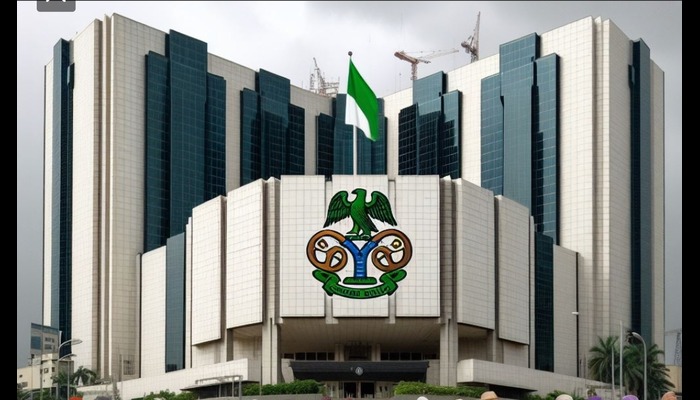
Organised Private Sector leaders and economists have projected that the Central Bank of Nigeria’s Monetary Policy Committee will most likely retain the Monetary Policy Rate at 26.5 per cent when it meets on Monday and Tuesday, citing heightened geopolitical tensions and their potential impact on inflation.
The stakeholders noted that Nigerian businesses would welcome a rate cut to ease borrowing costs and support investment, particularly in the manufacturing sector, which has struggled under high interest rates.
Their position comes despite a recent CBN Inflation Expectations Survey showing that 61.1 per cent of Nigerians want interest rates reduced ahead of the MPC meeting.
Economists and business leaders, including the Chief Executive Officer of the Centre for the Promotion of Private Enterprise, Dr Muda Yusuf, said prevailing global uncertainties, particularly the renewed conflict involving the United States and Iran, made it too early for the apex bank to begin further monetary easing.
“What I expect is a hold because it is possibly too soon to relax the MPR because of the current geopolitical issues. We have seen a very dramatic escalation, and this has implications for major macroeconomic indicators, particularly the general price level. Energy prices feed strongly into inflationary pressures, and crude oil prices have risen above $84. The inflation outlook is looking very disturbing,” Yusuf said.
He added, “It is unlikely there will be a rate cut. It is also not likely that there will be a further increase because the last inflation figure showed only a marginal deceleration. Although I don’t mind a rate cut because interest rates are too high, given the prevailing global conditions, especially the Middle East conflict, people hoping for a rate cut should exercise more patience.”
The President of the Lagos Chamber of Commerce and Industry, Leye Kupoluyi, said businesses would benefit significantly from lower borrowing costs, noting that high interest rates remained a major component of the cost of doing business.
“Everyone wants a reduced interest rate. Interest rate is a major part of the cost of doing business because everybody needs funds for their business. If the interest rate is high, the cost of business will be very high. The lower the interest rate, the better. It will allow businesses to plan and borrow money instead of relying on short-term loans that ultimately increase costs for consumers,” Kupoluyi said.
He, however, urged caution ahead of the MPC decision, saying, “Let’s see what they come up with. We have to look at it both ways. But definitely, for interest rates to come down, it is for the benefit of industry, businesses, and ultimately the customer.”
A Professor of Economics and Public Policy at the University of Uyo, Prof Akpan Ekpo, also predicted that the committee would likely maintain the current rate because of the uncertainty created by the US-Iran conflict.
“Many people would like a reduced interest rate because the MPR is the anchor rate for bank lending. But my worries are the US-Iran war. We don’t know when it is going to end. For that reason, I suspect they might keep the rate the same for a while,” Ekpo said.
He warned that the conflict could worsen inflationary pressures. “If I were with the MPC, I would hold the rate the way it is for now and wait for the next meeting. With the Iran-US war, inflation may go up. When inflation goes up, the MPC would be inclined to increase rates to contain inflation. The government should instead focus on the manufacturing sector so that we can create jobs,” he added.
The Chief Executive Officer of Economic Associates, Dr Ayo Teriba, said while businesses and households desired lower interest rates, the MPC would likely base its decision on data unavailable to the public.
“Every reasonable person wants to see lower interest rates. We have seen stable exchange rates, and inflation has hovered around 15 per cent for six months. But the committee will determine whether this is the right time to ease policy. I don’t have access to the information they have, so I will wait for them to explain whatever decision they take,” Teriba said.
He noted that the conflict in the Middle East had not significantly altered Nigeria’s inflation trend so far but cautioned against pre-empting the committee’s decision. “I’d like to see the monetary policy rate and the CRR come down, but I accept my limitation that I don’t have access to the information available to the MPC. I will wait to be informed by them,” Teriba said.
Businesses have repeatedly argued that high borrowing costs have constrained investment, especially in the manufacturing sector, where operators say access to affordable long-term credit remains critical for expansion, job creation and increased production.