



306th MPC: We Saw Things Other People Didn’t See – Cardoso
The Central Bank of Nigeria’s {CBN} Monetary Policy Committee {MPC} on July 21st, 2026 wrapped up its 306th meeting with a decision that was expected by market operators. It signals where the apex bank is headed. Predating the meeting, financial experts had predicted the outcome taking cognisance of the troubled global economy, especially the renewed hostilities in the Middle East. The crisis has created untold disruption in global economic chain.
The Bank retained all key parameters, the second consecutive decision in the year: Monetary Policy Rate {MPR} 26.50 percent, Asymmetric corridor: 50+/-450 basis point around MPR, Cash Reserve Ratio {CRR} at 45 percent for commercial banks, and Liquidity Ratio at 30 percent, Standing Facilities Corridor around the MPR at +50/-450 basis points; Cash Reserve Requirement (CRR) for Deposit Money Banks at 45.00 per cent, Merchant Banks at 16.00 per cent, and non-TSA public sector deposits at 75.00 per cent respectively.
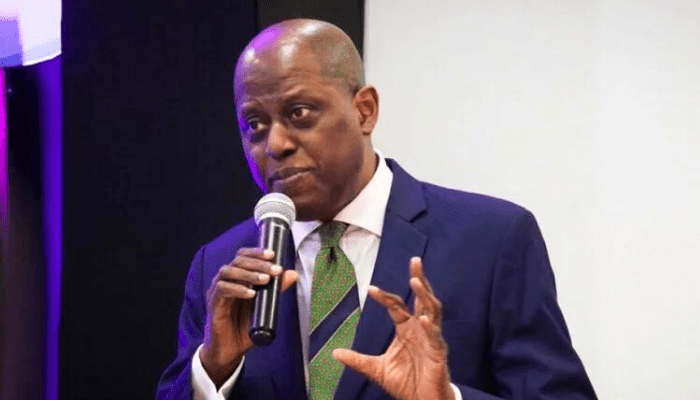
Justifying the stance, Olayemi Cardoso, the CBN governor said the eleven months of disinflation has vindicated the efficacy of monetary policy tightening measure, saying that “we saw things that most other people didn’t see”.
The decision clearly indicates a cautionary approach by the members given the renewed aggressions in the Middle East, causing aggravated energy cost, trade disruption, and fiscal pressures on defence spending. It could be also be reasoned that members may have weighed growth, foreign reserves accretion, and stability in the foreign exchange market to arrive at the decision. Though MPC acknowledged slight inflation uptick in June, it urged the CBN to be watchful, and avoid policy volatility thereby allowing previous tightening measure work through. A premature shift in market operators view could undermine confidence built over two years.
The governor said, “In view of the evolving developments, maintaining a cautious monetary policy stance remains appropriate. The MPC acknowledged Federal Government’s renewed commitment to strengthening policy coordination, with particular emphasis on the ongoing collaboration with the monetary authority which has helped to moderate the impact of the Middle East crisis on the Nigeria economy
Dr. Paul Alaje welcomed the decision, and hopeful on the CBN’s promise that “inflation will soon start trending down, except there are unforeseen externalities beyond CBN’s control which of course will have implications. What the CBN was saying is that the situation is under control, but on the lookout for a situation that will make inflation to be out of control”. The decision by the CBN, he continued is very significant. What they have done was to avert uncertainty in the market. Presently he enthused, CBN’s resilient level is appreciable.
Ishola Balogun, an investment banker considered the outcome a good posture for stability, but considered it tough for businesses. A pause he believes could improve investor confidence, and support capital market activities through policy predictability. The private sector based on his experience has had to worry about continuous tightening. Retaining the rate, he said provides predictability, but for SMEs and businesses high financing costs weakens production capacity and discourages investment expansion. Balogun in defence of his position cited insecurity, poor infrastructure, logistics, and energy costs as bigger drivers of inflation. He urged the government to earnestly embark on complementary fiscal and structural reforms instead of continuous tightening.
However, Bayo Agbi, Chartered Accountant, Agbi & Partners wants the CBN to monitor the banks, though better capitalized now and see if the executed banking recapitalization exercise is translating to affordable lending rates for households and businesses. He said high lending rate to SMEs and manufacturers weakens production capacity and discourages investment expansion. Agbi considered borrowing at 26.50 percent too expensive despite an 11-month disinflation trend, abruptly put on hold by the unprovoked middle east crisis.
The governor, Central Bank of Nigeria cited exchange rate stability, robust foreign reserves, and a well-capitalised banking system as reasons the economy withstood global energy shocks. He explained that holding the rates supports Naira stability and will boost investor confidence, as well as supporting capital market activities by providing policy predictability. He added that Nigeria’s recent sovereign rating upgrade was also welcomed by the committee.
The Monetary Policy Committee’s decision was apt, and inevitable at a period marked by global uncertainty, a fragile disinflation trend, and aftermath of the largest banking recapitalization in over a decade – the CBN chose policy predictability over quick fixes. By holding rates, the committee is signalling that Nigeria’s macroeconomic gains – exchange rate stability, robust external reserves, and a better-capitalized banking system must be protected, even if it means slower growth in the short term. For households, the outcome means relief from inflation will remain gradual, especially with food inflation still running high in many states in the federation. For businesses and SMEs, borrowing costs will remain restrictive, underscoring the need to look beyond interest rates for growth.
True relief will only come from coordinated fiscal action: sustaining onslaught on banditry and insecurity, improving logistics, stabilizing energy, and avoiding election-year spending that could wipe off monetary gains. The recapitalization exercise gave banks the firepower to lend, but the MPC’s call to monitor lending rates and risk governance reminds us that stronger balance sheets must translate to real credit in the economy.
In conclusion, the 306th MPC meeting reflects a CBN that is prioritizing credibility and stability over short-term stimulus. It iwas a strategic, constructive, and cautious decision.
Ademola Bakare, financial analyst writes from Abuja