

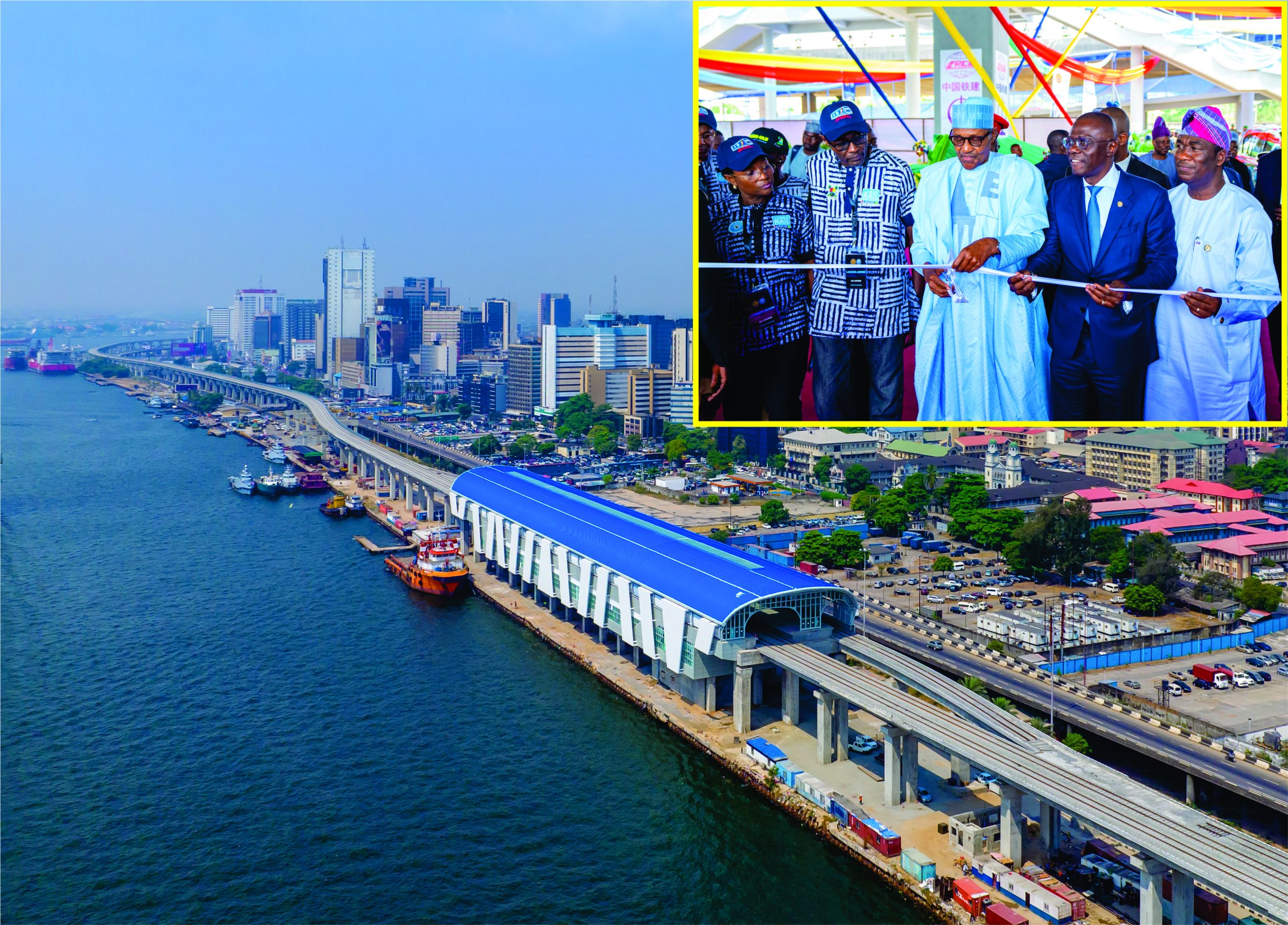

Three Years Of Blue Line: How Lagos’ Rail Revolution Is Reshaping Urban Mobility
By Kolawole Ojelabi
As Lagos Rail Mass Transit Blue Line marks three years of commercial operations, the transformative rail project is emerging as a defining symbol of the Sanwo-Olu administration’s commitment to modern, sustainable, and integrated public transportation.
Three years ago, on September 4, 2023, the Lagos Rail Mass Transit (LRMT) Blue Line commenced commercial passenger operations, opening a new chapter in the history of public transportation in Lagos.
From its initial 12 daily trips, the Blue Line has progressively expanded to about 94 daily trips, providing thousands of Lagos residents with a faster, safer, more predictable and more environmentally sustainable alternative to road transportation.
The milestone represents far more than the operation of a railway: It is the evidence of Lagos State’s determination to build a modern mass transit system capable of supporting the mobility needs of a rapidly growing megacity.
For commuters travelling between Mile 2 and Marina, the Blue Line has brought greater predictability to daily journeys, reduced dependence on congested roads and provided an alternative that is largely insulated from the traffic gridlock that characterises many major Lagos corridors.
The Blue Line has demonstrated the value of rail transportation as a critical component of an integrated urban mobility system. Its electrified operations are contributing to Lagos State’s broader climate and sustainability objectives by reducing reliance on fossil-fuel-powered road vehicles and, consequently, contributing to the reduction of transport-related emissions.
As Blue Line operations expand with more trips, and more commuters shift from private cars and conventional road transportation to mass transit, the environmental benefits are expected to become even more significant. The railway is therefore not simply moving people; it is contributing to the long-term vision of a cleaner, greener and more sustainable Lagos, with public transportation playing a central role in the State’s ambition towards a low-carbon and eventually zero-emission transport ecosystem.
The impact of Blue Line extends beyond the tracks. The project has created direct and indirect employment opportunities across train operations, engineering, maintenance, security, station management, customer service, ticketing, cleaning, retail and other supporting services. It has also stimulated economic activity around stations and along the railway corridor, creating opportunities for businesses and encouraging new patterns of commercial development.
This is where the concept of Transit-Oriented Development (TOD) becomes increasingly important. With appropriate planning, areas around Blue Line stations can evolve into vibrant mixed-use communities where residential, commercial, recreational and business activities are integrated with efficient public transportation.
Such development can reduce the need for long-distance journeys, encourage walking and other forms of non-motorised transport, improve access to economic opportunities and increase the value and productivity of areas connected to the rail network. The Blue Line is consequently becoming an important catalyst for urban regeneration and economic development.
While the first three years have demonstrated what rail can achieve in Lagos, the bigger ambition lies ahead. The Lagos State Government and the Lagos Metropolitan Area Transport Authority (LAMATA) are working towards completing the remaining infrastructure required to take the Blue Line fully to Okokomaiko by 2027.
The completion of the entire corridor will significantly extend the reach and impact of the line, bringing rail services closer to a much larger population and creating stronger connections between communities along the corridor.
The extension will also strengthen the integration of rail with other modes of public transportation, including buses and other first and last mile services, thereby making the public transport system more seamless and convenient for commuters. The ultimate objective is an integrated transportation network in which commuters can move easily from one mode to another, using a system that is reliable, affordable, safe and sustainable.
The third anniversary of the Blue Line is, therefore, an appropriate occasion to celebrate the vision and political commitment that made the project possible. The Lagos Rail Mass Transit Blue Line stands as one of the most visible expressions of Governor Babajide Olusola Sanwo-Olu’s THEMES+ development agenda and his administration’s determination to transform transportation infrastructure in Lagos. The Governor deserves commendation for sustaining the political will, investment and institutional support required to move the Blue Line from an ambitious infrastructure project to a functioning modern railway serving Lagosians every day.
The milestone also provides an opportunity to recognise the professionals and institutions behind the successful operation of the system.
Credit goes to the Managing Director of LAMATA, Engr. Mrs. Abimbola Akinajo, FNSE, whose leadership has been instrumental in driving the operationalisation, expansion and continuous improvement of the Lagos urban rail system.
Under her leadership, LAMATA has continued to demonstrate that the development of mass transit is not merely about constructing infrastructure, but about creating a transportation system that improves the quality of life of residents and supports the economic future of the city.
Three years of the Blue Line is a milestone, but it is not the destination. The next phase is about completing the infrastructure to Okokomaiko, increasing capacity, improving service quality, strengthening multimodal integration and maximising the economic and environmental benefits of the railway. It is also about ensuring that the communities along the corridor benefit from the opportunities that a modern rail system brings.
As Lagos looks towards 2027, the Blue Line offers a glimpse of the future of transportation in Africa’s largest city: a future where commuters spend less time in traffic, where cleaner modes of transportation reduce emissions, where rail-connected communities become centres of economic activity, and where reliable public transportation becomes an essential driver of inclusive growth.
Three years on, the Blue Line has moved beyond being a landmark infrastructure project. It is becoming a catalyst for a new Lagos — a more connected, productive, sustainable and livable megacity.
Congratulations to the Governor of Lagos State, Mr. Babajide Olusola Sanwo-Olu, on this significant milestone, and commendation to the Managing Director of LAMATA, Engr. Mrs. Abimbola Akinajo, FNSE, and the entire LAMATA team for their commitment to making the Lagos rail revolution a reality.
The Blue Line has been in service for three years. The journey to a fully integrated Lagos transport system continues—with 2027 firmly in sight.
Ojelabi is the Head, Corporate Communication at LAMATA