


Bayelsa @30: Roads, Power, Jobs Remain Priorities – Diri
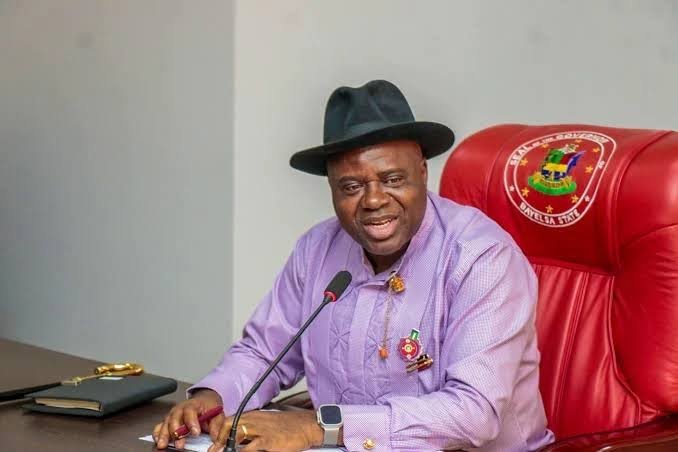
Bayelsa State Governor, Douye Diri, has paid tribute to the founding fathers of the state, saying their sacrifices placed an enduring responsibility on the present generation to build a better Bayelsa.
Bayelsa State was created on October 1, 1996, by the then Head of State, the late General Sani Abacha, following years of agitation by the people of the area for greater political recognition and representation.
The governor said the state had recorded significant progress in its three decades of existence but noted that much remained to be done to fully realise the aspirations of those who fought for its creation.
He said the anniversary provided an opportunity to honour the people who laid the foundation for the state and reflect on what the present generation would leave behind.
According to Diri, the creation of Bayelsa was the outcome of years of advocacy, petitions, protests, prayers and sacrifices by generations of Ijaw people seeking justice, recognition and a greater voice within the Nigerian federation.
He recalled the contributions of prominent figures, including Major Isaac Boro, Chief Harold Dappa-Biriye, Chief Melford Okilo, Pa Ernest Ikoli, Chief Joshua Fumudoh, King Alfred Diete-Spiff, Dr Lambert Eradiri, Chief N.A. Frank Opigo, Senator Amatari Zuofa, Dr Amba Ambaiowei, T.K. Ogoriba, Chief Diepreye Alamieyeseigha, Chief Dan Etete, Vice Admiral Victor Ombu and Rear Admiral W.G. Yanga, among others.
“Some gave their time. Some gave their resources. Some gave their liberty. Some paid the ultimate price. To all of them, we owe an enduring debt of gratitude,” he said.
Diri noted that Bayelsa inherited enormous challenges at its creation, including difficult terrain, inadequate infrastructure, poor connectivity and a fragile economic base.
He said the development of roads and bridges, universities and polytechnics, an international airport and increased Federal Government presence had transformed the state from its humble beginnings.
The governor said his administration was consolidating the foundations laid by previous governments through investments in education, healthcare, infrastructure, power and human capital development.
However, he identified roads, electricity and employment opportunities for young people as areas requiring continued attention.
“Much has been achieved, and much remains unfinished. Our roads must reach every corner of the state. Our power supply must grow to match our ambitions. And our young people must find real opportunities to work, to build and to prosper,” Diri said.
He disclosed that work was progressing on the three senatorial roads, while the state’s Independent Power Project was being expanded from 60 megawatts to 100MW.
He also said work was ongoing on the 30,000-capacity stadium and the nine-storey state secretariat complex.
During a media chat after the broadcast, Diri said road infrastructure remained one of the major investments of his administration.
He recalled that at the creation of the state, only the headquarters of present-day Sagbama, Kolokuma/Opokuma, Ogbia and Yenagoa were accessible by road, noting that the headquarters of Southern Ijaw, Ekeremor and Nembe had since been connected to Yenagoa.
According to him, the development had reduced travel time, improved security and boosted socio-economic activities.
“If everybody thought that constructing a 630-metre bridge across River Nun to Oporoma was an impossibility, we have proved and will continue to prove that it is not an impossibility,” he said.
Diri also linked the state’s development to the potential of its blue economy, saying his administration was investing in aquaculture, agriculture and other areas capable of creating employment.
He said underwater welding would be introduced into the curriculum of technical colleges and higher institutions in the state to equip young people with skills needed to participate in the emerging blue economy.
“The blue economy is a huge one. We have already started with the Agge Sea Port,” the governor said.
He also said his administration was working with the Federal Government on the development of deep seaports and other maritime infrastructure.
Diri urged Bayelsans, particularly youths, to acquire relevant skills rather than depend solely on white-collar employment.
He said the state’s future economic opportunities were linked not only to oil and gas but also to its agricultural and maritime potential.
“As we celebrate 30 years of Bayelsa State, let us not merely look back with pride. Let us look forward with purpose,” he added.