


Reps Probe NIPCO Gas Licences, NNPC Executive Over Money Laundering Claims
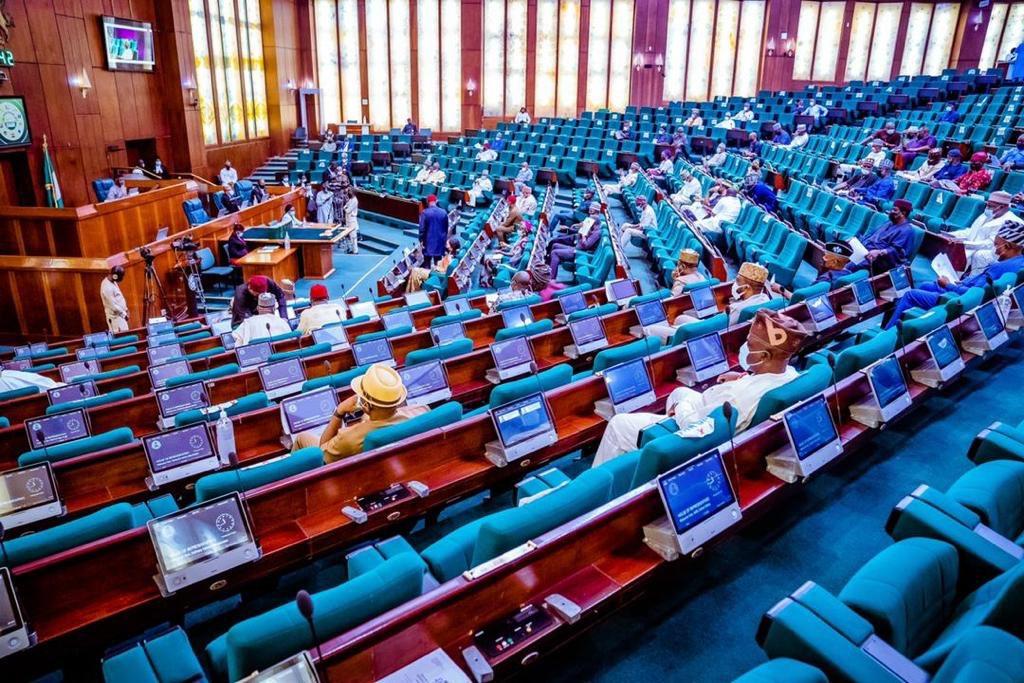
The House of Representatives Committee on Petroleum Resources (Downstream) has launched investigations into petitions seeking the cancellation of gas distribution licences held by NIPCO Plc in five locations.
This is as the Committee accused the Executive Vice President (Downstream) of the Nigerian National Petroleum Company Limited, Dr Mumuni Dagazu, of money laundering and abuse of office.
The Committee also constituted two sub-committees to conduct preliminary investigations into the petitions, which its Chairman, Ikenga Ugochinyere, described as serious complaints requiring urgent attention.
The decision was announced on Monday in Abuja at the technical briefing marking the end of Downstream Week 2026.
The Sub-Committee investigating the allegations against Dagazau will be chaired by Aliyu Al-Mustapha, with Amobi Ogah as Deputy Chairman. It has seven days to conduct a preliminary investigation and report its findings to the main Committee.
The Sub-Committee examining the NIPCO petition will be chaired by Peter Aniekwe, with Shehu Dalhatu as Deputy Chairman.
The petition against NIPCO calls for the investigation, suspension and cancellation of gas distribution licences issued by the Nigerian Midstream and Downstream Petroleum Regulatory Authority to the company for Lagos, Ogun, Oyo and Osun states, as well as the Lagos and Lekki Free Trade Zones.
In the second petition, the complainants accused Dagazau of money laundering and abuse of office. The Committee, however, stressed that the allegations had not been established and that the investigation would determine the merits of the complaints.
Addressing journalists at the event, Ugochinyere said the Committee had not reached any conclusion on either matter, assuring all parties of a fair hearing.
“These are allegations, and the Committee has reached no conclusion on them. All parties will be given a full and fair opportunity to be heard,” he said.
He added that the Committee would not ignore complaints touching on the integrity of the downstream petroleum sector and promised that Nigerians would be informed of the outcome of the investigations.
Neither NIPCO Plc nor Dagazau had publicly responded to the petitions as of the time of the briefing.
The investigations formed part of the Committee’s wider review of developments in the downstream petroleum sector during Downstream Week 2026, at which it also passed votes of confidence in President Bola Tinubu, the leadership of the NMDPRA and Alhaji Aliko Dangote.
The Committee said reforms in the sector were yielding results but identified pipeline security, reliable crude supply to domestic refineries and a properly regulated import market as areas requiring sustained government attention.
Ugochinyere praised the NMDPRA’s Chief Executive, Rabiu Umar, and the authority’s Executive Directors, saying their work had helped stabilise the sector.
Figures presented at the briefing indicated that “domestic refineries increased their contribution to national petrol supply by more than 75 per cent, with no supply shortfalls recorded and more than 25 days of national sufficiency maintained.”
The committee also cited “the commissioning of the Port Harcourt Petroleum Product Laboratory, the licensing of a petroleum liquid trading exchange and the finalisation of a framework for a national strategic stock of up to 20 days,” adding that, “plans are in place to raise the reserve to 90 days in 2027.”
Despite the progress, Ugochinyere insisted that energy security depended on effective pipeline protection and adequate crude supply to local refineries.
“There is no supply security without pipeline security,” he said, adding that importation should supplement verified shortfalls rather than become a permanent substitute for domestic production.
He also called for strict enforcement of the Domestic Crude Supply Obligation, saying local refineries must have reliable access to feedstock to remain viable.
The Committee disclosed that it had opened an inquiry into alleged underpayment for crude oil by some companies and questioned NNPCL over legacy transactions and refinery rehabilitation.
“We will not accept silence as an answer,” Ugochinyere warned.
The committee further urged the Federal Government to increase funding for pipeline surveillance and ensure timely provision of logistics to operators, arguing that improved security had contributed to the rise in crude oil production.
It expressed confidence that Nigeria could achieve its target of producing three million barrels of crude oil per day with sustained government support.
The committee also said it would continue to pursue amendments to the Petroleum Industry Act to strengthen provisions on crude supply to domestic refineries, licensing and protection of local refining investments, while maintaining a regulated import market.
Ugochinyere said the objective was to balance immediate security of supply with the long-term development of Nigeria’s domestic refining capacity.
“Our goal is balance: security of supply today, and a strong domestic refining industry for tomorrow,” he stressed.