



FG Rejects Immediate Solar Import Ban
The Federal Government has shelved plans to immediately ban solar panel imports following opposition from business leaders and renewable energy advocates, who warned that restricting supplies before local manufacturers can meet demand could increase electricity costs and slow the country’s clean energy transition.
The Minister of Innovation, Science and Technology, Kingsley Udeh, announced the decision on Friday, assuring Nigerians that the government would focus on ensuring that solar panels sold in the country meet required standards rather than shutting out imported products.
The decision comes as Nigeria continues to depend heavily on imported solar equipment to provide electricity to households and businesses struggling with unreliable grid supply, while millions of citizens remain without access to electricity.
Data from Chinese customs cited by energy think tank Ember showed that China exported 2.4 gigawatts of solar panels to Nigeria in the 12 months to August 2026. The shipments were valued at $269m, reflecting the country’s reliance on imported equipment to expand solar power generation.
An analysis of the figures suggests that generating an equivalent amount of electricity with diesel-powered generators could cost about $980m annually at prevailing fuel prices, potentially leaving users with savings of more than $700m a year if solar generation fully displaces diesel use.
Speaking in an interview with the Nigerian Television Authority obtained by our correspondent on Friday, Udeh said the government was determined to ensure that only quality solar products were available in the domestic market, whether locally manufactured or imported from reliable sources.
He said, “Covering the energy gap in Nigeria. Part of what we are doing is referred to as renewed hope solarisation project where we are taking off federal universities, institutions, special academic institutions. Giving them access to electricity. We can’t ban solar panel importation if we can’t produce locally. But while we wait to get to that point of manufacturing capabilities within Nigeria. Which is growing.
“Soon you will see that we only have in the Nigerian market standard solar panels, either manufactured in Nigeria or imported from reliable sources, and they’re all high standard to ensure that we have energy assets being supported by solar power or renewable energy,” the minister said.
The announcement provides relief to solar importers, installers and consumers who had feared that an immediate restriction would disrupt supply, increase equipment prices and undermine investments in off-grid electricity systems.
However, energy stakeholders said the government must translate its commitment to local manufacturing into a clear policy framework that allows domestic production to expand without making solar power unaffordable.
Commenting, the President of the Renewable Energy Association of Nigeria, Ayo Ademilua, said members of the association supported the government’s ambition to develop a domestic solar manufacturing industry but warned that local factories were not yet equipped to meet the country’s demand in terms of volume and price.
“Our members share the Minister’s dream of a Nigeria that makes its own solar panels. Many of us are already investing in local assembly and manufacturing, and we want that industry to grow. But we have to be honest about where we are,” Ademilua said.
He added, “Solar has become a lifeline for millions of Nigerians the grid doesn’t reach: homes, hospitals, schools, farms and small businesses. Local production is growing, but it can’t yet meet that demand in volume or price. A ban now would have raised costs, stalled projects and put the progress of the last decade at risk.”
Ademilua’s comments highlight the challenge facing the government as it seeks to promote local manufacturing while maintaining access to affordable renewable energy.
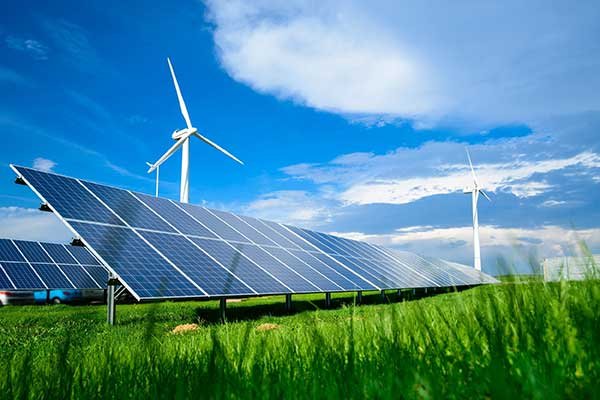
Solar panels are increasingly being used by households, small businesses, farms, hospitals and other establishments seeking alternatives to expensive petrol and diesel generators. For many businesses, solar systems also help reduce exposure to fuel price fluctuations and disruptions in grid electricity supply.
The potential savings are significant. A 420-watt solar panel costing about $60 can generate approximately 550 kilowatt-hours of electricity annually, according to the figures provided by energy analysts.
Generating the same amount of electricity with diesel could cost about $160 a year at current prices. Under that comparison, the cost of the panel could be recovered in roughly five months, assuming its entire output replaces diesel-generated electricity and excluding the costs of batteries, inverters, installation and maintenance.