


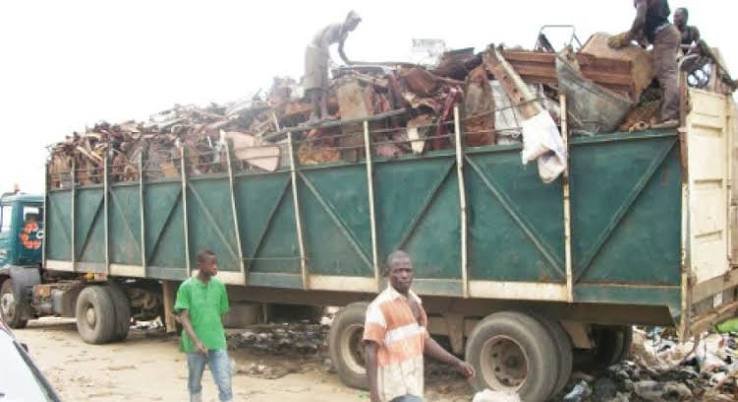


Scrap Dealers Begin 15-day Warning Strike Over Pricing Dispute
The National Association of Scrap and Waste Dealers Employers of Nigeria has commenced a 15-day nationwide warning strike over a disagreement with iron-smelting companies in the country.
The disagreement centres on the purchase prices and measurement of scrap metals.
“We call this press conference to brief the pressmen about our strike. We call on our members nationwide to embark on a warning strike for 15 days, starting from today, Thursday, October 1, 2026,” he said.
He said the association was embarking on the strike because of what it described as unfair practices by iron-smelting companies that manufacture steel rods.
Soja said the association would ensure a total stoppage of scrap supplies to all the companies across the country to draw attention to complaints ranging from alleged arbitrary reductions in the value of scrap after delivery to disputed weighing procedures and other sharp practices.
According to him, the actions of the companies had reached a point where continuing normal operations under the prevailing conditions was becoming increasingly difficult for members of the association.
He alleged that some companies persistently reduced the agreed value of scrap after the materials had been delivered, leaving dealers to suffer substantial losses.
He noted that the financial impact could run into millions of naira on a single truckload, depending on the quantity and deductions imposed.
“They depreciate our price on a daily basis, causing a lot of losses to our customers. In one truck, we lose about three to four million naira daily,” he said.
Soja said the association had been told that developments in the international market and geopolitical tensions had affected demand and created excess stocks in some markets, making cheaper materials available for import.
“Why should such developments be used to impose losses on local scrap dealers while reductions in raw material costs were not similarly reflected in the prices of finished steel products?” he queried.
He said another major grievance raised by members of the association concerned the weighing of scrap supplied to steel companies.
Soja alleged that discrepancies sometimes emerged between the quantity delivered by dealers and the weight eventually used to determine payment.
He cited instances in which dealers allegedly supplied a full tonne but were paid for considerably less after the material was weighed at the companies’ facilities.
“When we sell 1,000kg to them, that is 1,000kg that makes one ton. When you scale it, you find out that the kilogramme on the weight is 600kg or 700kg. The highest you can get is 750kg,” he alleged.
The association also raised concerns about the quality and specifications of reinforcement bars produced by some steel manufacturers.
Soja alleged that some manufacturers tampered with the dimensions of iron rods, claiming that products marketed under particular measurements could fall below the stated specifications.
He expressed concern that such practices, if allowed to continue, could have serious implications for the construction sector, particularly where reinforcement materials were involved.
He, however, called on the Federal Government to intervene in the dispute, alleging that the companies’ activities had forced many youths out of business.
“These companies are sending a lot of youths out of jobs. You can see, apart from agriculture, we are the highest employers of labour. We have millions of youths in the scrap industry,” he added.