


2027: Alaafin Urges Politicians To Unite, Focus On Fixing Nigeria
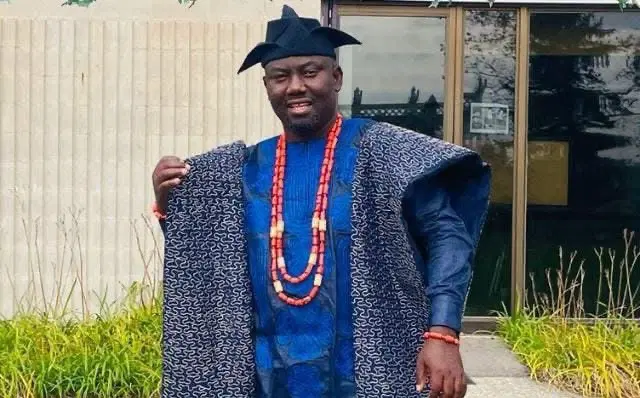
The Alaafin of Oyo, Oba Akeem Owoade, on Wednesday called on politicians to eschew primordial sentiments and be more pragmatic in finding solutions to the myriad problems confronting the country.
He said national growth and development depend largely on the good sense of justice, moral worth and responsibility, conscientiousness, devotion to duty, selflessness, probity and honesty exhibited by the leaders and the led.
The Alaafin gave the advice in a statement issued by his Director of Media and Publicity, Bode Durojaiye, in Ibadan, the Oyo State capital, to commemorate Nigeria’s 2026 Independence celebration.
He said, “It is assumed that a nation’s value system is sacred and could extend beyond that nation’s boundaries. All nations are supposed to be proud of their value systems, just as a person is proud of his or her upbringing and character and would try to impress that behaviour and beliefs on others.
“Basic values are traditional and historic, reflecting aspects of the experience that each nation went through since its inception as a national unity.
“Politicians must close ranks, logically brainstorm, and arrive at an in-depth and coherent understanding of the contending state-building issues in the country. Politically, the amalgamation of the Southern and Northern protectorates in 1914 brought together peoples of diverse historical and cultural backgrounds into one political space to chart a new future.
“Despite this obvious challenge of diversity, the commitment of the colonial government towards ensuring the unity was demonstrated in a number of policies aimed at fostering cultural, political, social and economic ties among the various groups in the new nation.
“Thus, from the time of amalgamation of the two protectorates with the colony of Lagos, till the period of regional administrations, Nigeria became committed to a united Federation. Its commitment arose from its acceptance of federalism as a particular kind of functional arrangement between diverse communities for living together and working together nationally whilst preserving a measure of separate entity.
“The quantum of unification and the quality of unity achieved were obvious. Education, solid infrastructures, gainful employment, social welfare programmes and sound healthcare delivery were successfully accomplished by our leaders of blessed memory, Chief Obafemi Awolowo, Dr Nnamdi Azikiwe, and the Sardauna of Sokoto, who fought for the country’s independence,” he explained.
According to him, since citizens who are the major determiners of the success or otherwise of democratic and development programmes are under the traditional influence of Obas, the position of traditional rulers as potent mobilisers, advisers, mediators, facilitators, adjudicators and nominators should be greatly harnessed.
“It is, therefore, suggested that the traditional institutions, which are the only remnants of our pre-colonial political system, must be preserved, promoted and strengthened through official constitutional recognitions and acknowledgement.”
The paramount ruler lamented that traditional institutions had gone through thick and thin in the country’s political history, from the pre-colonial through the colonial to the post-colonial eras.
He stressed that, from the pre-colonial era, traditional institutions had been strengthened and weakened, elevated and humiliated, empowered and disempowered by emerging political and ruling classes.
“The traditional institutions in pre-colonial Yorubaland had all elements of modern governmental systems and they perfectly suited the social, political and economic situations of the era, with the overall goal of the welfare of the generality of the people. The advent of colonial rule and the imposition of Western styles of government not only reduced the powers and relevance of the traditional rulers but also made them subservient to their subjects, the educated elite.
“Since independence in 1960, the political statuses of traditional rulers have gone from bad to worse, with far-reaching consequences for governance and administration in the country,” the monarch asserted.
The Alaafin, therefore, commended the Bola Tinubu administration for focusing on rebuilding and laying the foundations for a sustainable country.