


Deforestation, Waste Dumping Worsening Flooding, Says Ogun-Osun Basin Boss
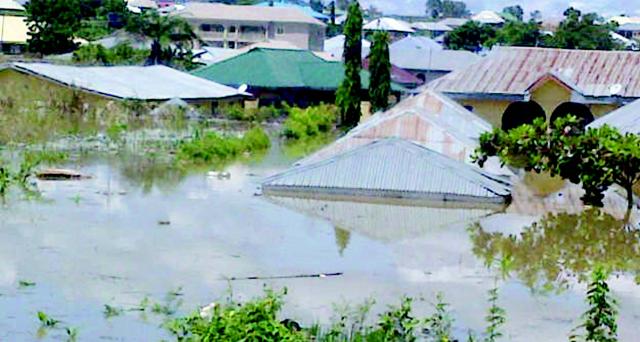
The Managing Director and Chief Executive Officer of the Ogun-Osun River Basin Development Authority, Dr Adedeji Ashiru, has called for an end to deforestation and the indiscriminate disposal of waste into waterways, warning that such practices could worsen flooding and lead to loss of life.
Ashiru made the call on Monday in Abeokuta, Ogun State, during a tree-planting exercise and public awareness roadshow held to commemorate the 2026 World Rivers Day celebration, with the theme, “No Forest, No Rivers, No Water, No Life.”
The MD/CEO said the increasing effects of global warming and climate change had made environmental protection a collective responsibility, noting that Nigeria was also experiencing the consequences through unpredictable rainfall and flooding.
He said, “Today, the entire world is experiencing global warming and climate change, and Nigeria is not excluded from what the world is going through. In recent times, we have seen rainfall that is not predictable. We have seen heavier rainfall than usual, and we have seen flooding occurring in our communities. All these are as a result of global warming and climate change.”
The O-ORBDA boss, however, said collective action could help reduce the impact of climate-related disasters, urging individuals, communities and governments to take responsibility for protecting the environment.
According to him, environmental degradation was not solely the responsibility of industries or government agencies, as the actions of ordinary citizens also contributed to the problem. Ashiru said, “The man on the street, the woman on the street selling corn, selling agbalumo, and the driver driving on the road—we are all part of the cause of climate change and global warming. That is why this campaign for the 2026 World Rivers Day, ‘No Forest, No Rivers, No Water, No Life,’ is very important.”
The MD said the tree-planting exercise carried out as part of the celebration was intended to reinforce the need to halt deforestation and protect forests, rivers and waterways.
He said, “That is the main reason we are here today to plant trees. This is a message to the entire community that if we are planting trees today, what we are saying is this: let us stop deforestation. We need our forests. We need our rivers, and we need our waterways to be clean. This has a ripple effect in preventing global disasters, local disasters and flooding in our communities.”
He also urged residents to extend the message of environmental protection to their neighbourhoods, stressing that activities around local drainage systems could have consequences beyond their immediate surroundings. The MD explained that waste dumped into drainage channels could be carried by rainwater into rivers, causing blockages that could contribute to flooding.
He said, “Some may be wondering, some rivers are not close to us. But you have drainage that passes through your neighbourhood, and we end up littering those drainages.
“I can tell you that the litter in the drainages are washed away by rainwater and ends up in our rivers. They cause blockages, and this eventually leads to flooding and loss of life.”
He therefore urged residents to practice responsible waste disposal and protect trees and waterways as part of their daily responsibilities.
“In essence, what we are saying is that every act of deforestation and every dump you make into a drainage that passes in front of your house can contribute to flooding and loss of life,” he said.
The MD said the tree planted during the event symbolised the authority’s commitment to environmental protection and called on residents to support efforts aimed at preserving the environment.
Also speaking at the event, the Commissioner for Environment, Mr Ola Oresanya, represented by Mr Kayode Akinwade of the Department of Environmental Quality Control, Water Preservation and Regulatory Services, berated the unhygienic practice of blocking waterways with refuse, urging residents to embrace a strong attitudinal change to combat the practice.
Oresanya also said planting trees along the riverside would help provide a strong embankment for the river and thereby check erosion and flooding while protecting surrounding communities.
The guest lecturer at the event, Prof Victoria Ojo, of the Department of Pasture and Range Management, Federal University of Agriculture, Abeokuta, warned that the destruction of forests posed a serious threat to the sustainability of rivers, water supply and public health in Nigeria.
Speaking on the theme, “No Forests, No Rivers, No Water, No Life,” Ojo said the relationship between forests, rivers and human survival should be treated as an interconnected system rather than separate environmental concerns.
The professor warned that poor water management could increase the risk of diseases by creating conditions suitable for disease vectors and pathogens.
She identified blocked drainage, siltation, uncontrolled damming and the loss of forest cover as factors that could lead to stagnant pools, slow-moving water and other conditions favourable to disease transmission.