


‘Nigerians Can Insult, Attack Me And Still Sleep Well,’ Says Tinubu
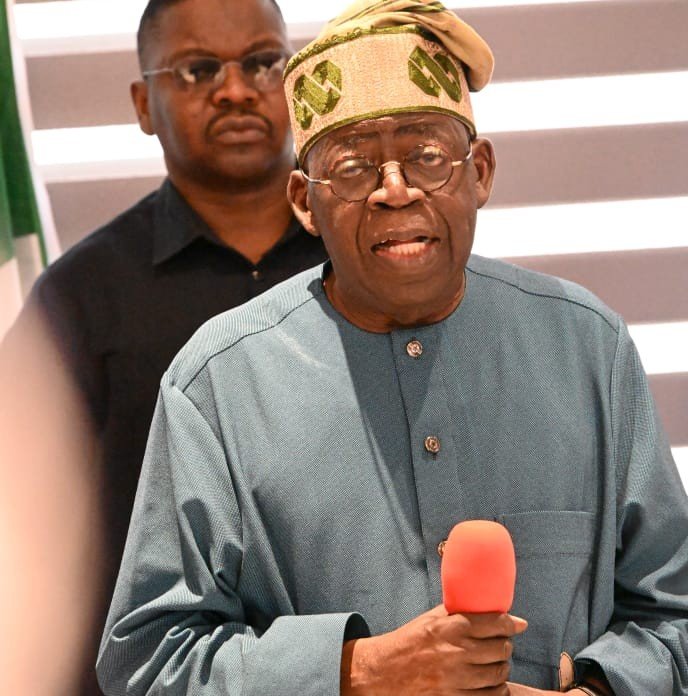
President Bola Tinubu on Thursday disclosed how his administration has tolerated criticisms without reprisals, saying Nigerians can insult and attack him and still sleep well at night.
The President, represented by the Secretary to the Government of the Federation SGF, Senator George Akume, spoke on Thursday at the Centenary Celebrations of the Daily Times of Nigeria Limited, held in Abuja.
“Let us admit that under this government, you can insult and attack the president and still go to bed without midnight troubles. This philosophy lies at the heart of the Renewed Hope Agenda,” the SGF quoted the president.
Tinubu said he recognises the role of the media in shaping the destiny of a nation, noting that the president “has consistently demonstrated an appreciation of the fact that Nigeria’s present challenges did not emerge overnight,” and that many of the challenges “are rooted in structural weaknesses that have accumulated over decades.”
He said the task of national renewal “requires the courage to understand where we have come from and confront what we have laid back and made difficult, necessary choices, but where we must go.”
The president described the reforms of the present administration as going beyond policy changes, stating that they “are about changing the trajectory of our nation” and are aimed at building a stronger fiscal foundation, creating a more productive economy, strengthening institutions, attracting investments, improving infrastructure, and expanding opportunities for young people to help Nigeria “compete more meaningfully and purposefully in the global economy.”
On the significance of the centenary, the president said, “One hundred years is not an anniversary; it is a testament to endurance, relevance and institutional resilience,” adding that the Daily Times “has not only reported Nigeria’s history, it has been an important leader, analyst and catalyst” in the nation’s story.
He said, “A nation that forgets its history is at risk of repeating its mistakes, but a nation that understands its history can draw wisdom from its successes, learn from its setbacks and confidently design its future.”
The president also unveiled the Nigerian Grand Book, a publication which he said was designed to celebrate Nigerians who have contributed to national progress and to preserve the country’s institutional memory for future generations. “History should not be a museum of yesterday. History should be an instrument of engineering tomorrow,” he said, adding that the publication would allow Nigerians to “tell our history from our own perspective” without relying on outside narrators.
He said the book complements the Daily Times’ 100 Times Heroes Award, noting that “nations are built by people”, including entrepreneurs, farmers, scientists, public servants, artists, innovators and citizens who serve their communities.
He cautioned that by 2050, Nigeria’s population is projected to reach 450 million people, an outlook he said carries major implications for food sovereignty and water resources.
The president commended the management and leadership of the Daily Times, as well as Mr Fidelis Anosike, for what he described as a historic contribution to the preservation of national heritage, and urged the newspaper to “continue to thrive” for another hundred years.
Earlier in his address, the Chairman of Folio Media Group, owners of the Daily Times of Nigeria Limited, Mr Fidelis Anosike, said the newspaper turned 100 on June 26, 2026, and that the Nigerian Grand Book was designed “to usher in the resurrection and re-emergence of the Daily Times as the Phoenix of our times.”
He traced the paper’s history from its acquisition by the Daily Mail of London to its listing on the Nigerian Stock Exchange in 1975, coinciding with the Nigerian Indigenisation Act, and credited the transparency of the Olusegun Obasanjo administration for midwifing what he called “a clinically transparent privatisation” of the Daily Times of Nigeria.
Anosike said the acquisition of the Daily Times was led by young Nigerians in their 30s, whom he said had proven capable of replicating “the professionalism, acumen, and capacity for mergers, acquisitions, expansions and diversifications” seen in Western economies.
He thanked guests for gracing the occasion, describing the journey with the Daily Times of Nigeria as one that had “emboldened our dreams, futuristic forays built on faith, growth and altruism.”
The centenary event was attended by the Deputy Speaker of the House of Representatives, Benjamin Kalu; governors of Niger, Zamfara and Nasarawa States, as well as representatives of Lagos and other states; ministers; the presidential candidate of the Nigeria Democratic Congress (NDC), Peter Obi; Vanguard Publisher, Uncle Sam Amuka; ThisDay publisher, Prince Nduka Obaigbena; traditional ruler; and a host of others.
Earlier, former President of the African Development Bank (AfDB), Akinwumi Adesina, in his keynote address, praised the contribution of Daily Times to the evolution of journalism in Nigeria.