


Sanwo-Olu Seeks LAWMA Collaboration With IJLA Fellow On Waste Management
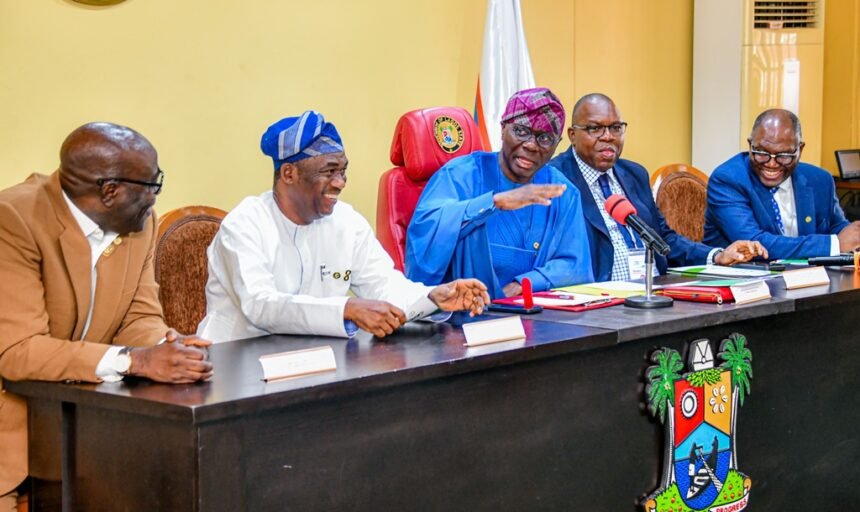
The Governor of Lagos State, Mr Babajide Sanwo-Olu, has called for collaboration between the management of the Lagos Waste Management Authority (LAWMA) and fellows of the Lateef Jakande Leadership Academy (LJLA) on waste management.
Governor Sanwo-Olu’s proposal was based on the recommendations outlined by fellows of LJLA during their policy presentation on waste and risk management on Wednesday evening during his mentorship session with the Class of Catalysts, the academy’s third cohort.
The Governor called for a meeting between the fellows and LAWMA management, so they could present their findings and explore practical solutions to the sector’s challenges.
He said that engaging with LAWMA would give the LJLA fellows the chance to ask questions, defend their recommendations, and interact directly with officials responsible for waste management in the state.
Governor Sanwo-Olu explained that the initiative reflected his vision for the leadership academy — to create a platform where young people could use research and new ideas to challenge the government while also providing the government with an opportunity to listen.
The Governor also commended the fellows for their capstone projects, including initiatives around a library and ICT centre, describing them as interventions capable of delivering measurable impact and lasting beyond the current cohort.
He urged the fellows to maintain their connections after completing the programme, emphasising that a strong alumni network could serve as a source of ideas, knowledge, and support for future initiatives.
Speaking on the fellows’ experience during a recent trip to Rwanda, Governor Sanwo-Olu encouraged the fellows to study successful models from other jurisdictions and identify aspects that could be adapted to improve governance in Lagos.
He also highlighted the importance of consistency in government policies, saying investors need clarity and predictability before committing resources.
“People want clarity. People want definitive pronouncements. No matter how tough that pronouncement, they want you to be consistent with it so that they can plan,” he said.
Governor Sanwo-Olu also urged the fellows to remain open to learning, listen before responding, and learn from their mistakes, noting that the ability to turn failures into lessons is a vital leadership trait.
He questioned how leaders would be judged by history: “How will history judge you? What will people say to you?”
The Executive Secretary of the Lateef Jakande Leadership Academy, Mrs Ayisat Agbaje-Okunade, said the cohort was the third since the academy’s establishment, reaching about 90 young people in total.
She explained that graduation was not the end of the fellows’ leadership journey but a new phase with greater responsibilities.
Agbaje-Okunade said the fellows had been exposed to both theoretical and practical leadership through readings, mentorship sessions, fireside chats, and shadowing opportunities with commissioners and heads of ministries, departments, and agencies.
She stated that the academy was founded not just to impact leadership knowledge but to develop young people capable of making meaningful contributions to society.
“When they enter the fellowship, they don’t know the sort of leader they want to be. But they know the sort of leader they do not want to be,” she said.
Agbaje-Okunade also mentioned that the fellows were expected to continue demonstrating patriotism, responsibility, and respect for the law after leaving the academy.
“Our vision has always been to build a society transformed by the leadership of young people. So our transformation is very much dependent on them, even after they leave the fellowship,” she added.
She further explained that the academy had expanded the fellows’ exposure through international engagements, including a recent policy trip to Kigali, Rwanda, where they interacted with government officials, mayors, district heads, and communities.
She said discussions were also ongoing towards establishing a memorandum of understanding with a Rwandan institution following the policy visit.
She said the fellows had participated in fireside chats with leaders both within and outside of Nigeria, as well as policy-focused engagements with government institutions.
One of the fellows, Adepeju Salami, a Lagos State civil servant, described the fellowship as an important platform for young people to discover and develop their leadership potential.
She said the programme was particularly relevant to her as a public servant and should be sustained as an investment in preparing young Nigerians for leadership.
Salami noted that the fellowship helped participants discover qualities they previously did not realise they possessed through interactions with fellow participants and established leaders.
According to her, investing in young leaders can have effects beyond the fellows, benefitting their communities as well.