


Bawa Bags Ph.D, Offers Fresh Insight On Nigeria’s Fight Against Money Laundering, Terrorism Financing
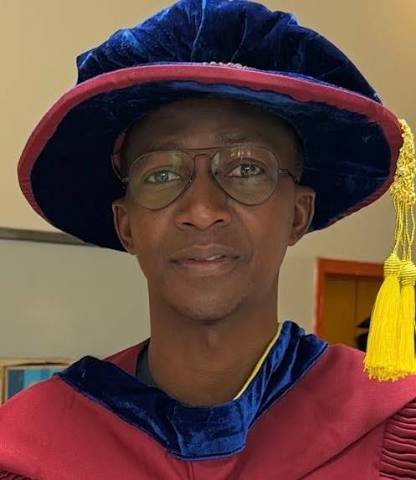
Former Chairman of the Economic and Financial Crimes Commission (EFCC), Dr Abdulrasheed Bawa, has completed a doctoral research that examines the strengths and shortcomings of Nigeria’s anti-money laundering and counter-terrorism financing framework, earning him a Doctor of Philosophy (Ph.D.) in International Relations and Diplomacy from the Nile University of Nigeria, Abuja.
The former anti-corruption czar successfully defended his doctoral thesis before graduating from the Nile University on Thursday, July 16, 2026, a development that has drawn congratulatory messages from family members, associates, colleagues and admirers who described the achievement as another milestone in his commitment to scholarship and public service.
Rather than focusing solely on legal reforms, Bawa’s research explores the gap between policy adoption and practical implementation in Nigeria’s efforts to combat money laundering and terrorism financing, arguing that institutional effectiveness remains the critical challenge despite significant legislative progress.
His dissertation examined the impact of the Financial Action Task Force (FATF) international standards on combating money laundering and the financing of terrorism in Nigeria, with emphasis on the country’s adoption, implementation and overall effectiveness.
In extracts from his thesis, Bawa submits that, “The study investigates how Nigeria’s political and socio-economic realities shape compliance outcomes and influence the practical effectiveness of anti-money laundering and counter-terrorism financing measures.
“The study adopted a qualitative exploratory research design. Primary data were obtained through 36 semi-structured interviews and two focus group discussions involving regulators, law enforcement agencies, financial institutions and designated non-financial businesses and professions.
“These were complemented by documentary analysis of Financial Action Task Force and Inter-Governmental Action Group against Money Laundering in West Africa mutual evaluation reports, national risk assessment reports, legislations, policy frameworks and institutional documents.
“Data were analysed thematically and interpreted using compliance theory and liberal institutionalism.
“The findings revealed that Nigeria has substantially adopted the Financial Action Task Force international standards through significant legislative, regulatory and institutional reforms, including the enactment of the Money Laundering (Prevention and Prohibition) Act, 2022 and the Terrorism (Prevention and Prohibition) Act, 2022, alongside the strengthening of institutions such as the Nigerian Financial Intelligence Unit, Economic and Financial Crimes Commission and its Special Control Unit against Money Laundering.
“However, the study found that practical implementation and enforcement effectiveness remain limited. Persistent challenges such as political interference, corruption, weak institutional capacity, poor inter-agency coordination, insecurity, inadequate technological infrastructure and Nigeria’s highly informal and cash-based economy continue to undermine effectiveness.
“The research identified a significant gap between technical compliance and practical enforcement, conceptualised as paper versus functional compliance. It further developed the concept of dual-speed compliance, where highly regulated financial institutions demonstrate stronger compliance, while designated non-financial businesses and professions and informal sectors remain weakly regulated and vulnerable to abuse.
“The study concluded that although the Financial Action Task Force international standards have improved Nigeria’s legal and institutional anti-money laundering and counter-terrorism financing framework, their overall impact on reducing money laundering and terrorism financing remains moderate due to structural and contextual limitations.”
The former EFCC chairman also proposed a series of measures aimed at improving the country’s response to financial crimes.
In his recommendations, Bawa states that, “The dissertation therefore recommended stronger political commitment, improved institutional coordination, enhanced supervision of designated non-financial businesses and professions, investment in technological and human capacity, context-sensitive implementation of risk-based approaches, expansion of financial inclusion and identity management systems and reforms that prioritise functional effectiveness over formal compliance.
“The study contributed to anti-money laundering and counter-terrorism financing scholarship by advancing new conceptual insights into uneven compliance and implementation challenges in developing and high-risk jurisdictions like Nigeria.”
It is instructive to note that Bawa’s research comes against the backdrop of Nigeria’s sustained efforts over the years to strengthen its anti-money laundering regime through legislative reforms, institutional capacity building and closer alignment with global standards developed by the Financial Action Task Force. Successive reforms have sought to improve financial transparency, enhance intelligence gathering and reinforce collaboration among regulatory and law enforcement institutions.
Bawa’s academic work adds to ongoing policy conversations by examining how implementation challenges affect the effectiveness of existing legal frameworks and institutions responsible for combating financial crimes.
His latest academic achievement has also been celebrated by associates and professional colleagues, who described the doctorate as evidence of his commitment to continuous learning and knowledge-driven public service.
A recipient of the national honour of Commander of the Order of the Niger (CON), Bawa is also a Certified Fraud Examiner (CFE) and a Certified Anti-Money Laundering Specialist (CAMS).
Congratulatory messages have continued to pour in from friends, colleagues and well-wishers, many of whom prayed for greater wisdom, good health and continued success in his future endeavours.