


FG To Review Licences Of DisCos, GenCos Over Poor Performance
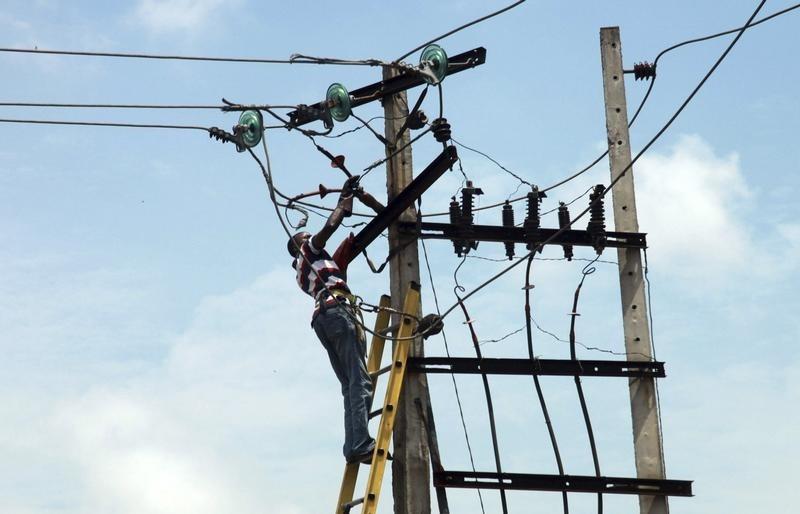
The Federal Government may, in the coming weeks, take punitive measure over the operating licences of some power distribution (DisCos) and generation (GenCos) companies.
This, it was gathered, may not be unconnected with the poor performance by some critical stakeholders in the value chain.
While President Muhammadu Buhari had recently terminated the appointment of the minister in charge of power, appointing Abubakar Aliyu to act as the new minister, Nigeria’s power sector has failed to perform years after privatisation, as level of power supply to homes and industries stagnates at about 4,000 megawatts.
Aliyu, Wednesday, in a document made available to journalists in Abuja, said plans are underway to decide on the fate of the sector.
“The Ministry is intensifying performance monitoring of the licensees and the licensing regime, especially their revised Performance Improvement Plans (PIP) to have a better understanding of why some critical stakeholders are performing below expectation.
“We shall be taking a careful and detailed look at issues of policy, capacity and the technical requirement, among other things. One very critical concern that we must address in this performance monitoring process is to find out if the terms for granting the licenses were onerous,” he noted.
While the Federal Government has spent over N1.7 trillion on the sector with plans to spend additional $3 billion, Aliyu said government would now work on the full implementation of extant laws and design new ones in a bid to “match up with the huge sums invested by this administration.”
Coming at a time the President of African Development Bank (AfDB), Akinwunmi Adesina, blamed the nation’s energy sector for the sorry state of industrial development, Aliyu said, specific areas of conflict and tensions within the power industry value chain are being harmonised for greater synergy, which would bring about a wholesome alignment of responsibilities within the governance system of the power sector.
Adesina had, on Tuesday, said the lack of reliable power supply was affecting the growth of industries in the country, while speaking at the 49th annual general meeting of the Manufacturers Association of Nigeria (MAN) in Abuja.
Quoting a report by the International Monetary Fund (IMF), he said the country loses $29 billion yearly, which is about 5.8 per cent of its Gross Domestic Product (GDP) due to a lack of reliable power supply, adding that Nigerians spend $14 billion yearly on generating sets and fuel.
“Today, no business can survive in Nigeria without generators. Consequently, the abnormal has become normal,” Adesina said.
“To be a manufacturer in Nigeria is not an easy business. You succeed not because of the ease of doing business, but by surmounting several constraints that limit industrial manufacturing.
“Today, the major challenge facing Nigeria’s manufacturing is the very high cost and unreliability of electricity supplies. Load shedding and the inconsistent availability of electrical power have resulted in high and uncompetitive manufacturing costs.”
The AfDB president further said that unless Nigeria decisively tackles its energy deficiency and reliability, its industries would always remain uncompetitive.
TO this, the Power Minister said there are ongoing conversations within the power value chain. “Stakeholders are talking and cooperating with one another and in so doing, bridging the observed disconnect within the sector.
“It must be clearly stated that within this value chain, some responsibilities are by virtue of the Electric Power Sector Reform Act (EPSRA) performed by our private sector partners and other agencies of Government. These partners are being more closely monitored and sometimes given the needed nudge in the right direction to achieve our objectives.
“Hopefully, we will soon begin to experience the imminent turn around in the power sector. We are determined to deal with some policy issues, the legal and regulatory bottlenecks, and the human factors involved in the implementation and coordination of the power sector’s road map,” Aliyu said 50 days after resuming duties as acting minister.